Finding the Best ISP Billing System in Kenya for 2026
Searching for the best ISP billing system in Kenya? Our guide compares top solutions on MikroTik integration, M-Pesa payments, and scalability for Kenyan ISPs.

For any Kenyan provider, the best ISP billing system isn't just software; it's your financial backbone. It needs to be a specialised platform that automates how you collect money, talks flawlessly with your network hardware like MikroTik, and, most importantly, understands local payment methods. A modern system like Centipid, which was built specifically for our market with deep MikroTik v7 and M-Pesa integration, is the single most important tool an ISP can have to stay profitable and grow.
Why Smart ISP Billing Is No Longer Optional in Kenya's 2026 Market
Kenya's internet market is booming, and that puts a massive strain on Internet Service Providers (ISPs), particularly the growing Wireless ISPs (WISPs). As you sign up more and more customers, trying to keep up with billing using spreadsheets and manually tracking payments just doesn't work. It’s an outdated approach that slows you down and, worse, causes you to lose money.
The biggest issue is revenue leakage. Without a solid, automated system for invoicing, payment tracking, and cutting off non-paying clients, ISPs can easily lose a huge chunk of their income. For many growing providers, we've seen this leakage hit as high as 20-30% — a crippling figure that stops growth dead in its tracks.
The Real Cost of Inefficient Billing
The damage from poor billing goes far beyond just lost cash. Think about the hours your technical team wastes chasing payments when they should be maintaining the network or planning an expansion. It also creates a terrible customer experience, full of confusing payment processes and support calls that an automated system could have prevented.
A modern ISP billing system solves these problems by giving you one central place to manage everything. The key benefits are practical and immediate:
Automated Revenue Collection: The system handles it all—generating invoices, sending them out, processing payments through gateways like M-Pesa, and even sending reminders.
Seamless Network Integration: It connects directly to your MikroTik routers to manage who gets access. If a customer's bill is overdue, the system can automatically suspend their service.
Better Customer Management: Subscribers get their own portal to see invoices, pay their bills, and even change plans without needing to call your support desk.
Here’s a look at what a clean, functional dashboard like Centipid’s offers. It gives you a clear, actionable summary of your ISP's health.

This kind of unified view lets you watch your revenue, see what subscribers are doing, and manage your network from a single screen. It turns complicated data into simple, smart decisions.
The right billing platform isn't just an admin tool; it's a growth engine. It plugs financial leaks, frees up your technical team, and gives you the foundation to scale up and compete.
The market's rapid growth proves this. Billing efficiency has become a core strength for market leaders like Safaricom, which held a commanding 35.6% market share by September 2025. Their success, happening as the total market ballooned to 2.29 million subscriptions, shows how proper systems enable fast scaling. While manual billing lets revenue slip away, cloud platforms like the solution from Centipid Technologies Ltd. integrate with MikroTik v7 and provide recurring invoicing and multi-gateway payments to slash that leakage to under 5%. You can see more data on Kenya’s growing internet market and its key players on tuko.co.ke.
Ultimately, choosing the best ISP billing system in Kenya is the most critical decision an operator will make. You can learn more about what to look for in our detailed guide on ISP billing software. This is about building a solid base for sustainable, profitable growth in a very competitive market.
What to Look for in an ISP Billing System Built for Kenya
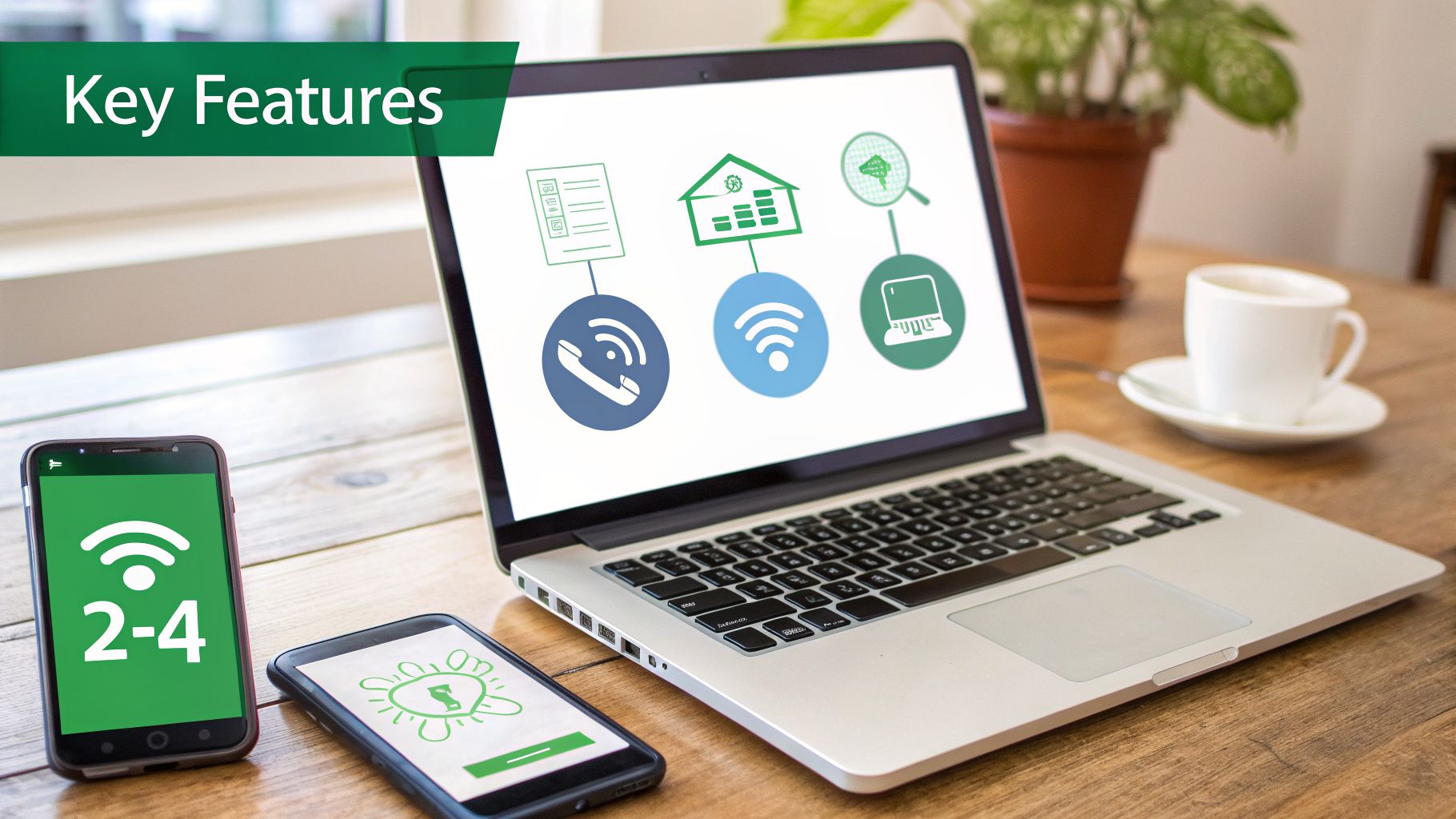
When you're searching for the best ISP billing system in Kenya, it's easy to get lost in generic feature lists. The reality on the ground, however, demands more than just software that sends invoices. You need a platform that understands and automates the entire journey of a Kenyan internet subscriber, from the moment they connect to your network to how they prefer to pay their bill.
For any Kenyan ISP, this boils down to two critical areas: how the system talks to your network gear and how it handles payments. Let's dig into the features that really count.
Seamless MikroTik RouterOS Integration
If you're a Wireless ISP (WISP) in Kenya, you're almost certainly using MikroTik routers. It's the backbone of the industry here. That’s why your billing system must integrate deeply with MikroTik RouterOS to automate both PPPoE and Hotspot user management without a hitch.
This isn't just about a basic API link. True integration means the platform does the heavy lifting for you:
Automatic User Creation: A new customer signs up and pays, and their account is instantly created on your MikroTik router. No manual setup needed.
Service Plan Enforcement: The system automatically applies the correct speed limits and data caps according to the customer's package.
Access Control: It has to automatically cut off service for non-payment and, just as importantly, reconnect a user the second their payment comes through. This single feature saves countless hours of manual work.
A platform like Centipid achieves this by connecting directly with your router, giving you a single dashboard to manage all your PPPoE secrets and Hotspot users. When your billing and network are perfectly in sync, your operations become incredibly efficient.
Built-in Mobile Money Gateways
In Kenya, mobile money is king. It's not just another payment option; it's how business gets done. With a massive 95% or more of daily transactions flowing through services like M-Pesa, your billing system absolutely must have native, direct M-Pesa integration.
Any system that makes you rely on third-party plugins or messy API workarounds for M-Pesa is a non-starter. It introduces points of failure, adds hidden costs, and creates a clunky experience for your customers. Native integration is non-negotiable for reliable, out-of-the-box payment processing.
This should also include full support for STK Push, which sends a payment request straight to a customer's phone. This simple prompt dramatically boosts on-time payments by making it incredibly easy for subscribers to pay. You can learn more about how this works by checking out our guide on the Lipa na M-Pesa portal and its impact.
Automated Invoicing and Collections (Dunning)
I've seen so many ISPs waste valuable time and energy chasing down late payments. An effective billing system takes this entire burden off your shoulders through automated collections, a process known as dunning.
It begins with scheduled, recurring invoices sent automatically. But the real magic happens when an account is overdue. The system should then:
Fire off a series of polite payment reminders via SMS or email.
Temporarily suspend internet access after a grace period you set.
Instantly bring the connection back online the moment the payment is made.
This systematic approach to collections drastically cuts down on overdue accounts and lets your team focus on growing the business, not acting as debt collectors. Platforms like Centipid give you the flexibility to tune these rules to perfectly match your company's policies.
A Powerful Subscriber Self-Service Portal
Every time a customer calls you to ask for their bill or check their usage, it costs you money. A customer self-service portal is one of the most effective ways to slash these operational costs. By giving subscribers a branded, easy-to-use portal, you empower them to solve their own issues.
From this portal, your customers should be able to:
View and download their current and past invoices.
Pay their bill instantly using the integrated M-Pesa gateway.
Change their internet package on their own.
Keep an eye on their data consumption.
This does more than just cut down on your support tickets; it gives customers a sense of control and improves their overall satisfaction. Centipid, for instance, provides a fully brandable client portal that looks and feels like a seamless part of your own ISP’s website.
A Practical Comparison of ISP Billing Solutions for Kenya
Picking the right billing platform is one of the most critical decisions you'll make as a Kenyan ISP. To find the best ISP billing system in Kenya, you need to dig deeper than marketing slogans and see how different options actually perform on the ground. Let's compare the three paths most ISPs take: a specialised, locally-focused platform like Centipid, a generic international software, and a manual, custom-built system.
This isn't just about features; it's about the real-world impact each choice has on your daily operations, your cash flow, and your ability to grow.
Scenario 1: M-Pesa Integration and Getting Paid
For any Kenyan ISP, how you collect money is everything. In a market completely dominated by mobile money, the quality of your M-Pesa integration is the single biggest factor affecting your revenue.
A Specialised System (Centipid): With a system like Centipid, M-Pesa integration isn't an afterthought—it's baked right in. This means you get native STK Push functionality from day one. When an invoice is due, the system automatically triggers a payment request on the customer's phone. All they do is enter their PIN. The payment is reconciled instantly, and their service stays on. There are no third-party connectors, no hidden fees, and absolutely no manual tracking.
Generic International Software: These platforms will often claim "payment gateway support," but that rarely means native M-Pesa. To get it working, you’re forced to hire a developer to build a custom API integration. This is not only expensive and slow but also incredibly fragile. Every time the billing software or the payment API gets an update, you risk it breaking, creating a major failure point right where you collect your money.
Manual/Custom Systems: This is the most painful and inefficient approach. It forces customers to manually send cash to your PayBill, then send you a confirmation message. Your team then has to spend hours manually matching payments to invoices and updating records. It's a slow, error-prone process that simply cannot scale as your subscriber base grows.
Before committing to a system, it's wise to compare how each one handles the fundamental task of collecting payments in Kenya. The differences are stark.
ISP Billing System Feature Comparison for Kenyan Providers
Feature | Centipid Billing System | Generic International Software | Manual / Custom System |
|---|---|---|---|
M-Pesa Integration | Native STK Push & PayBill | Requires custom API development | Manual confirmation via SMS/WhatsApp |
MikroTik Automation | Deep, two-way integration | Basic API toolkit; requires scripting | No integration; manual provisioning |
Scalability | Built-in multi-branch management | May support multiple locations, but lacks local nuance | Extremely difficult; requires separate systems |
Subscriber Self-Service | Fully-featured portal included | Often a paid add-on or limited | Non-existent; relies on staff |
Setup & Deployment | Quick and guided | Can be complex and lengthy | Built from scratch; very slow |
A quick look at this table makes it clear: a system designed specifically for the Kenyan context solves core operational headaches that generic or manual systems create.
Scenario 2: MikroTik Integration and Network Automation
Your billing system needs to be the brain of your network, constantly talking to your MikroTik routers to control who gets internet access and when. The depth of this integration is what separates an efficient ISP from one buried in support tickets.
A purpose-built platform like Centipid offers deep integration with MikroTik RouterOS v7. This isn't just basic API access; it's a true command-and-control connection that automates user provisioning, service changes, and disconnections for both PPPoE and Hotspots. A generic system often only provides a basic API toolkit, leaving the complex automation logic for you to build and maintain.
For instance, when a customer uses the self-service portal in Centipid to upgrade their package, the system automatically updates their speed profile on the MikroTik router in seconds. With a generic platform, this would almost certainly require a staff member to manually log in and make the change, or depend on a custom script that your team has to constantly manage and fix. You can see more on how Centipid handles this level of automation in the official documentation.
The Real Cost of Inefficient Systems
Choosing a system not built for the local market has serious financial consequences, especially in Kenya’s booming internet space. The country's fixed-wireless segment exploded by 10.2% to 814,782 subscriptions in Q1 2025/26, with WISPs expanding into areas where billing automation is absolutely essential. Smaller operators consistently lose 15-20% of their potential revenue each year simply due to slow invoicing and payment delays. Centipid Technologies Ltd. was created to solve this exact problem, offering a MikroTik-integrated platform that has been shown to slash payment collection cycles from over a month to under 10 days—a game-changer for any growing ISP. You can read more about this market growth on Kenyan Wall Street.
When you choose a system not designed for Kenya, you are essentially accepting revenue leakage and high operational costs as the price of doing business. It's a form of technical debt that only gets more expensive over time.
Scenario 3: Multi-Branch Management and Scaling Up
As your WISP expands from one neighbourhood to managing networks across multiple towns or even counties, keeping everything organised becomes a major challenge.
A platform like Centipid is designed from the ground up with a multi-branch architecture. This gives you the power to:
Manage dozens of MikroTik routers across different locations from a single, unified dashboard.
Create location-specific branding, customer portals, and service plans.
Get a clear, top-level view of your revenue, subscribers, and network health across the entire operation.
While generic international software might support multiple locations, it rarely has the specific tools needed for the Kenyan market, like managing different pricing tiers for rural versus urban areas. And a custom-built system completely falls apart at this stage. You end up with disconnected spreadsheets or databases for each branch, making any kind of centralised reporting an absolute nightmare. The smart move is to choose a system that is built for growth from day one.
How Centipid Solves Real-World ISP Challenges in Kenya
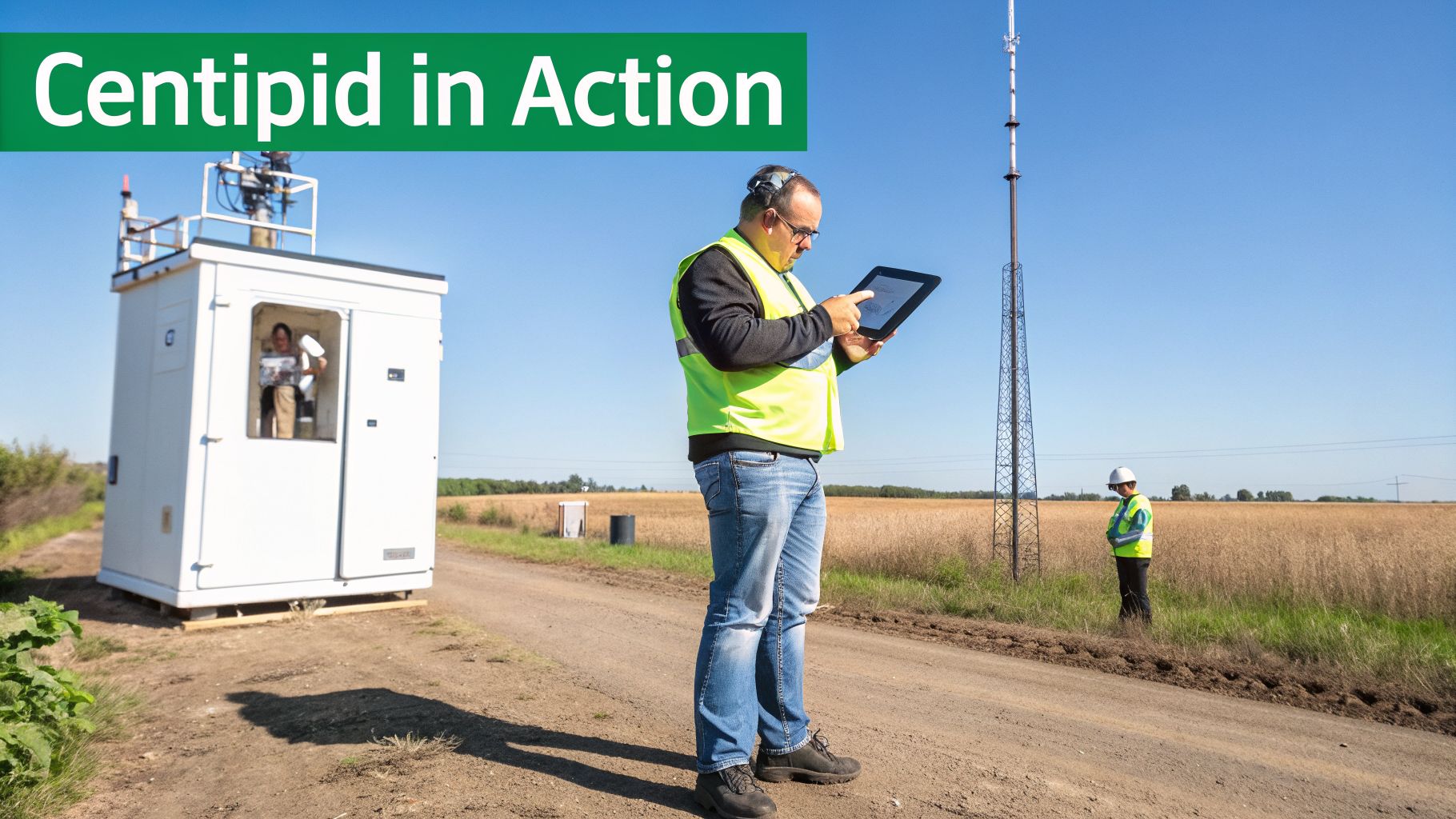
It’s easy to get lost in a list of software features. The real measure of the best ISP billing system in Kenya is how it stands up to the messy reality of running an internet business on the ground. A platform has to solve the day-to-day problems we all face—from collecting payments in remote areas to managing Wi-Fi in a bustling urban centre.
Let's move past the theory and look at three common scenarios. These aren't just hypotheticals; they're situations where a purpose-built system like Centipid can be the difference between struggling to keep up and building a profitable, scalable business.
Scenario 1: The Rural WISP
We all know this story. A small but ambitious Wireless ISP is using MikroTik routers to bring PPPoE internet to hundreds of homes scattered across a few villages. Before they find the right system, their biggest headache is simply getting paid. Customers have to travel to pay, and the ISP’s small team wastes countless hours chasing overdue accounts, manually cutting off services, and then dealing with the inevitable angry phone calls.
Once they switch over to Centipid, the difference is night and day.
Automated M-Pesa Invoicing: Invoices are fired off automatically by SMS. Customers pay instantly with STK Push. That endless cycle of manual reconciliation is just… gone.
Automatic Disconnections: The system talks directly to their MikroTik routers. If a payment is late, Centipid automatically shunts the subscriber's IP to a "cut-off" address list, blocking their internet until the bill is settled.
Fewer Support Headaches: Customers can now check their own balances and pay bills through a self-service portal. This simple change frees up the technical team to focus on what actually grows the business: network maintenance and expansion.
For a rural WISP, automating the payment-to-access cycle isn't a luxury; it's a lifeline. It plugs revenue leaks and transforms a chaotic manual process into a reliable engine for growth in underserved areas.
Scenario 2: The Urban Hotspot Operator
Now, think about an operator managing Wi-Fi for a chain of student hostels in Nairobi. The goal is straightforward: make money from the internet connection while giving students a decent experience. A generic, off-the-shelf billing system just won't cut it in this kind of high-turnover environment.
This is where a specialised tool like Centipid really shines.
A Proper Voucher System: The operator can generate and sell time-based or data-based vouchers in minutes (think 24-hour access or a 5GB weekly pass). This creates a simple, direct, and easy-to-manage revenue stream.
Branded Captive Portal: When a student logs on, they’re greeted by a login page with the hostel's branding. It looks professional and can even be used to post announcements or promotions.
Real-Time Usage Data: From the dashboard, they can see exactly how many people are online, how much data is being chewed through, and which voucher packages are selling best. This is invaluable for adjusting prices and planning for future capacity needs.
With Kenya’s fixed internet subscriptions climbing 6.9% to 2.29 million in just one quarter, the demand for smart revenue tools is undeniable. For hotspot operators, cafes, and telecom startups, platforms like Centipid are essential. In fact, many WISPs and hotspot businesses report that features like recurring billing and branded portals have boosted their collections by as much as 40%. You can explore more data on Kenya's subscriber growth over at spaceinafrica.com.
Scenario 3: The Growing Multi-Branch ISP
Finally, picture an established ISP with offices in both Nairobi and Mombasa. They started out with separate, manual systems for each location, and it quickly became a mess. Reporting was a nightmare, service plans were inconsistent from one city to the next, and management had no single, clear view of the company's overall health.
This is a classic scaling problem, and it's precisely what Centipid’s multi-branch architecture is designed to solve.
Standardised Operations: They can manage both branches from a single, central dashboard. This doesn't mean a one-size-fits-all approach; they can still set region-specific pricing and service plans as needed.
A Unified Revenue Dashboard: At a glance, the leadership team gets a consolidated picture of revenue, new subscribers, and outstanding payments across both Nairobi and Mombasa. This makes strategic planning and resource allocation so much easier.
Role-Based Access Control: The Mombasa branch manager can be given access to manage only their local customers and routers, while the head office retains full administrative control over the entire system.
These scenarios show that the best ISP billing system in Kenya is the one that understands your business model. Whether you're connecting remote homes, monetising public Wi-Fi, or scaling a multi-city operation, having the right tools for automation and control is what sets you up for success. To see how these features might work for your own setup, check out the official Centipid website.
The Roadmap: From Manual Chaos to Automated Control
Switching to a modern billing system isn't just about new software; it's a strategic move for financial stability and getting your time back. If you're currently wrestling with spreadsheets or a system that just doesn't cut it, moving to a purpose-built platform like Centipid is a clear, manageable process. We've designed it to get you up and running fast, without turning your business upside down.
You don't need a dedicated IT department to make this happen. With solid documentation and free technical help, the entire transition is straightforward. It’s a change that pays for itself, and quickly.
Getting Started with Centipid
So, what does it actually take to get going? We've boiled the implementation down to a few core steps. The whole point is to automate your ISP and start collecting revenue more efficiently, right away.
Sign Up and Explore: It all starts with the 14-day free trial. This is your chance to get a feel for the dashboard and its main features without any pressure or financial commitment. Just sign up and start clicking around.
Connect Your MikroTik Router: Next, you’ll link your MikroTik router to the platform using its API. This is the key step that enables automated access control for your PPPoE and Hotspot users. Don't worry, the process is well-documented, and our team is on standby to help if you hit a snag.
Import Your Subscribers: Once the router is connected, you can bring in your existing subscriber list. This gets all your customer data into one central place, finally giving you a single source of truth.
Set Up M-Pesa Payments: The final piece of the puzzle is configuring your M-Pesa payment gateway. This unlocks the automated STK Push and PayBill reconciliation that is absolutely essential for streamlining payments in the Kenyan market.
With those four steps done, your system is live. It will handle invoicing, track payments, and manage network access automatically. If you want to dive deeper into the technical side, check out our guide on managing your MikroTik network with Centipid.
A Clear-Eyed Look at Costs and Returns
When you're searching for the best isp billing system in kenya, price is always a big question. But focusing only on the monthly subscription fee is a mistake. You need to look at the total financial picture.
A platform like Centipid has a refreshingly simple pricing model. For PPPoE, you pay a flat fee per user. For Hotspots, it’s just a small percentage of the revenue you bring in. This clarity is a world away from the alternatives.
Think about the hidden costs of other options. Building an in-house system means a huge upfront development bill, plus ongoing costs for maintenance and security patches. Generic international platforms often nickel-and-dime you with extra fees for API access, payment plugins, and the support you actually need, making budgeting a nightmare.
But the real financial story here is the return on your investment (ROI). That monthly subscription cost is quickly erased by the money you save and the extra revenue you collect.
Let's talk real numbers:
Stop Revenue Leaks: Automating collections and suspensions plugs the gaps where 15-20% of your monthly revenue typically disappears. That alone is a game-changer.
Slash Admin Time: How many hours does your team spend chasing payments, manually reconciling M-Pesa statements, and logging into routers? That time can be spent finding new customers instead.
Dodge Huge Development Bills: You completely avoid the five or six-figure investment required to build and maintain your own custom software.
For most ISPs, the money saved from plugging revenue leaks and cutting down admin work covers the cost of Centipid several times over, often within the first couple of months. This isn't an expense; it's one of the smartest financial investments you can make in your ISP's growth and profitability.
Making the Right Choice for Your ISP in 2026
We’ve looked at the features, the real-world operational headaches, and the costs involved. It’s clear that the best ISP billing system in Kenya for 2026 isn’t going to be a generic, off-the-shelf product. The right choice is a platform that was actually built to solve the specific problems local providers like you face every single day.
This is exactly where Centipid pulls ahead of the pack. It was designed from its very foundation for deep, native integration with MikroTik and M-Pesa—the two most crucial pillars of any Kenyan ISP's operations. This singular focus means it directly gets to the root of what causes financial loss and eats up your team's time. Think of it less as just another piece of software and more as a dedicated tool for growing your business.
For a Kenyan ISP, the real decision isn't just about choosing a billing system. It's about finding a partner who gets your market. A platform that nails M-Pesa automation and MikroTik management isn't just a nice feature—it's the entire foundation for a business that can actually scale.
The decision tree below breaks down the thought process. It maps out a simple path based on core business needs like automation and getting a real return on your investment.
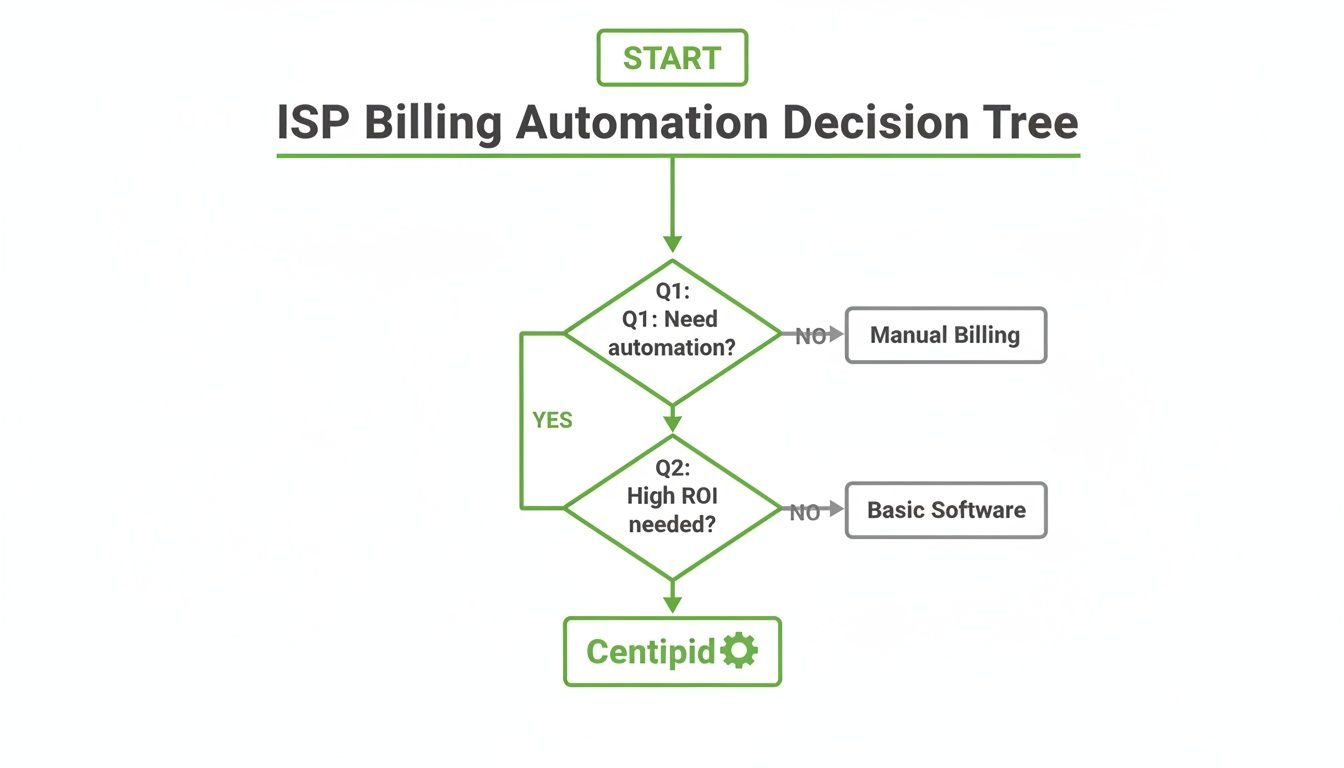
As the flowchart illustrates, once you prioritise efficiency and a strong return, a specialised system becomes the only logical endpoint. Centipid's focused design is the answer to that critical need.
Your Next Step Towards a More Profitable ISP
By putting revenue collection on autopilot, getting rid of manual data entry errors, and giving customers a self-service portal they can actually use, Centipid completely changes how your business runs day-to-day. It helps you shift your focus from constantly putting out fires to strategically growing your network and signing up more subscribers.
And because it's built on a scalable cloud architecture with multi-branch support, you can be confident it will grow right alongside you—from your first hundred customers to your next thousand.
Don't let lost payments and operational chaos dictate the future of your business. The health of your ISP tomorrow depends on getting the right tools in place today.
Take control of your ISP’s growth by starting a free 14-day trial of Centipid. See for yourself how seamless, Kenya-focused automation can truly transform your operations.
Frequently Asked Questions
When you're looking at a new billing system, a few key questions always come up. Here are some straightforward answers about how Centipid works, based on what we hear from ISPs like you every day.
How Hard Is It To Connect Centipid To My MikroTik Routers?
This is one of the first things people ask, and the good news is, it's surprisingly simple. Centipid was built to talk directly to MikroTik RouterOS (we recommend version 7 or newer) using its API. There’s no complex coding needed.
We provide clear guides and, more importantly, free technical support to get you connected. Most ISPs have their PPPoE or Hotspot services synced and their first customers online within a couple of hours. You can see the technical details in the official Centipid documentation.
A quick note on security: Centipid uses industry-standard encryption for all data, both when it's moving and when it's stored. A specialised cloud platform is often much safer than a server you manage yourself because you don't have to worry about server maintenance, security patches, or backups—that's all handled for you.
Can I Manage Both Monthly Subscribers and Wi-Fi Vouchers?
Yes, absolutely. We know many Kenyan ISPs run a hybrid model, and Centipid is designed for exactly that. You can manage your recurring monthly plans for home fibre or fixed wireless customers right alongside your time- or data-based vouchers for public Hotspots.
Having everything in one place makes life so much easier. You get a single dashboard to see what’s happening across your entire network, which is crucial as you start to scale up and diversify your services.
What Happens When I Need Technical Support?
You get it for free. Free technical support is included for everyone, starting from day one of your 14-day free trial. Our team is on hand to help you with the MikroTik integration, setting up payment gateways, or just figuring out a feature.
This is a huge advantage over trying to figure out an open-source system on your own or dealing with international platforms that often charge a premium for any kind of help. We’re here to make sure you get up and running smoothly and stay that way.
Ready to stop guessing about your revenue and automate your ISP operations? Centipid Technologies Ltd. built this platform with the specific needs of Kenyan internet providers in mind.
Start your free 14-day trial today and see how it works for your business.