ISP Billing System Nigeria: Your 2026 Growth Guide
Optimize operations with the best ISP billing system Nigeria. Automate growth, integrate MikroTik, and secure revenue. Your 2026 solution for market success.
At its core, an ISP billing system in Nigeria is the software that handles your customer management, collects payments, and controls who gets access to your network. It's what takes you from juggling spreadsheets and manually checking bank transfer alerts to running a smooth, automated operation built for growth in our competitive market.
Why Your ISP Billing System Is Your Most Important Asset
In Nigeria's fast-moving internet market, your billing system isn't just another piece of software—it's the engine that powers your entire business. Think of it as the central nervous system for your ISP. It’s what connects your customers, your network hardware, and your bank account into one seamless, automated workflow.
For most growing ISPs and hotspot operators I talk to, making this shift is a huge turning point. Getting away from manual spreadsheets and the headache of confirming every single bank transfer isn't just a nice-to-have anymore; it's essential for survival.
Overcoming Local Market Hurdles
Let's be honest, running an ISP in Nigeria is tough. You're dealing with fierce competition, customers who want to pay in a dozen different ways (from USSD and bank apps to direct transfers), and the constant pressure to stay agile. Trying to manage all of this by hand just opens you up to massive risks:
Revenue Leakage: Manually tracking who has paid and who needs to be cut off is slow and full of mistakes. Every delay is money you're losing.
Poor Customer Experience: Your subscribers expect their internet to be on the second they pay. Making them wait while you manually verify a payment leads to angry calls and, eventually, customers leaving for a competitor.
Limited Scalability: As you add more subscribers, the paperwork and admin tasks pile up. You end up spending all your time managing existing customers instead of growing the business.
An automated platform is designed to tackle these problems head-on, turning what was once a major administrative burden into a real competitive advantage.
A purpose-built ISP billing system is engineered to solve these exact problems. It automates the entire subscriber lifecycle, from signup and payment to network access and service suspension, ensuring you get paid on time, every time.
A specialised solution, like the one from Centipid, is built with these local challenges in mind. By plugging directly into local payment gateways and automating your network controls, it frees you up to focus on what really matters—expanding your coverage and keeping your subscribers happy. You can see the full range of automation features at centipidbilling.com.
While our market has its own unique flavour, the fundamental principles of ISP automation are universal. You can see how these systems work in other African markets by reading our guide on the best ISP billing system in Kenya. Ultimately, this kind of automation is the bedrock for building a profitable and sustainable internet business here in Nigeria.
How an Automated Billing System Works
Think about how you use a service like Netflix. You sign up, pick your plan, put in your card details, and you're watching movies instantly. Nobody calls you to activate your account, and you don't have to chase anyone down to keep your service running.
An ISP billing system in Nigeria aims to bring that exact level of smooth, hands-off operation to your internet business. It works as the central brain for your entire customer lifecycle, automating every crucial step so you can focus on growing your network, not getting buried in admin work.
It all starts with defining what you sell. The system lets you create and manage your internet plans—setting different speeds, data caps, and prices for various customers, as shown in the Centipid documentation. When a new customer finds your website, signs up through your portal, and pays, the real work begins without you lifting a finger.
The Automated Subscriber Lifecycle
The moment a payment is confirmed through a local gateway like Paystack or Flutterwave, the billing system instantly "talks" to your network equipment (like your MikroTik router). It immediately gives the customer internet access based on the exact plan they just bought.
From that point on, the system manages the entire customer relationship automatically:
Recurring Invoices: It generates and sends out invoices a few days before the subscription is due for renewal.
Payment Reminders: It sends polite follow-ups via email or SMS, making sure customers don't forget to pay and experience a service interruption.
Service Suspension: If a customer misses their payment deadline, the system automatically suspends their access. This single feature prevents revenue loss from unpaid service usage.
Instant Reactivation: The second the overdue payment comes through, the system restores the internet connection immediately. The customer is happy, and your revenue is secure.
This automated cycle gets rid of the frustrating delays and costly human errors that come with doing things by hand. Learning to automate your sales process is fundamental to achieving this kind of efficiency, which is what allows an ISP to scale without collapsing under its own weight.
Many growing ISPs are still stuck in a chaotic manual loop of spreadsheets, constantly checking for bank alerts, and manually logging into routers to activate or disconnect users. It’s a stressful way to run a business.
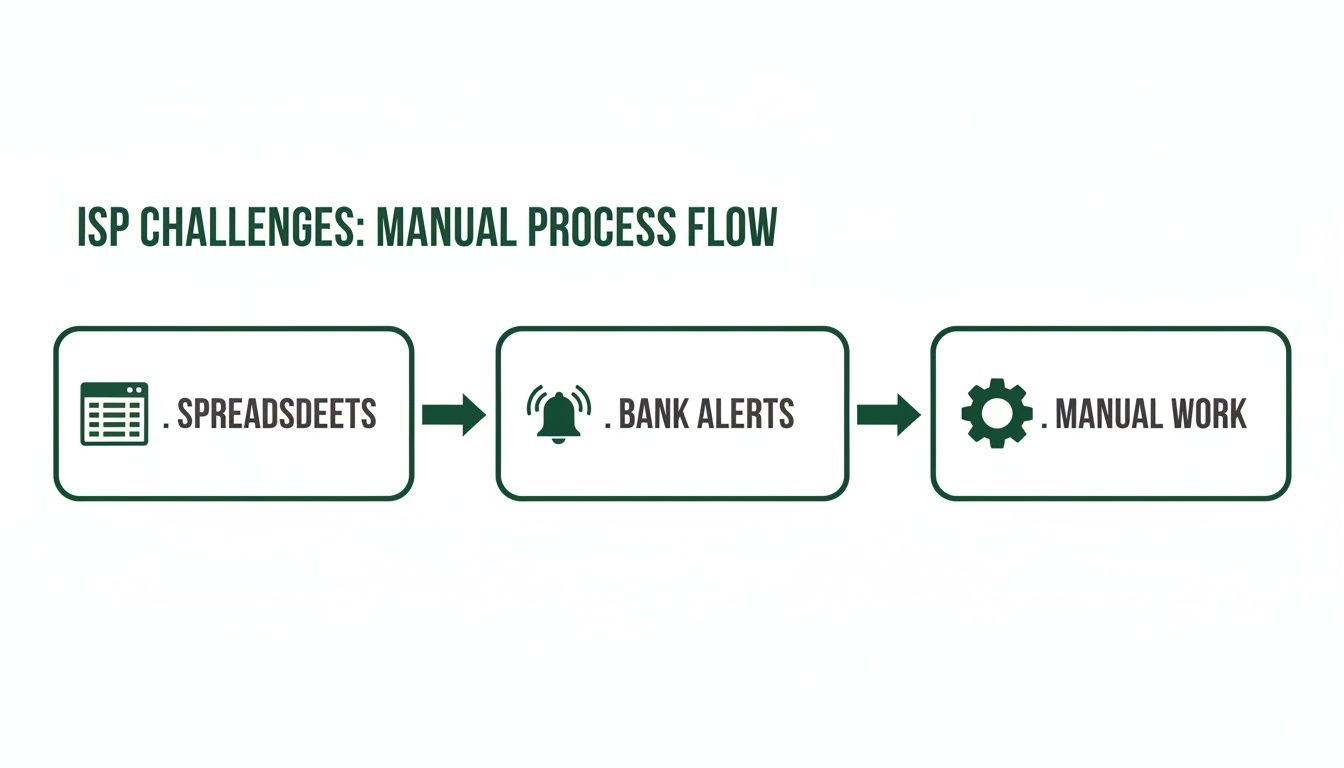
As you can see, this old-school workflow is a recipe for losing money, frustrating customers, and burning out your team.
Manual ISP Management vs Automated ISP Billing System
The difference between running your ISP by hand versus with an automated platform is night and day. One is a constant struggle filled with risk, while the other creates a solid foundation for growth.
In Nigeria's competitive market, efficiency isn't just a nice-to-have; it's a matter of survival. According to the Nigerian Communications Commission, ISPs brought in N92.1 billion against operating costs of N71.2 billion in 2022. You can read the full Nigeria's ISP performance and revenue insights yourself. That healthy margin is what automation protects and helps you expand.
This table clearly lays out the two realities.
Task | Manual Method (High Risk, Low Efficiency) | Automated with Centipid (Low Risk, High Efficiency) |
|---|---|---|
New Subscriber Signup | Wait for a bank alert, call the customer to confirm, then manually create their account on the router. It could take hours. | Customer signs up and pays on your website. Their account is created and activated in seconds. |
Payment Reminders | Someone has to remember to send reminders via WhatsApp or SMS, one by one. Many get missed. | The system automatically sends a series of personalised reminders before the subscription expires. |
Service Suspension | A staff member has to log into the network gear to manually disable an expired account, often hours or even days late. | Service is cut off automatically the moment an invoice becomes overdue. No unpaid usage. |
Data & Speed Control | Manually change bandwidth profiles for each user in the router. It’s easy to make a mistake and give away free data. | Service plans are pre-set. Speed and data limits are enforced by the system with 100% accuracy. |
Financial Reporting | Spend days trying to match names on a bank statement to a messy spreadsheet to figure out who paid. | Open a dashboard and see real-time revenue, active subscriber counts, and payment trends instantly. |
Moving to an automated system is one of the most powerful steps you can take to de-risk your operations and prepare your ISP for serious growth.
Features You Absolutely Need for the Nigerian Market
Picking the right ISP billing system in Nigeria isn't about ticking boxes on a generic feature list. It's about finding a system that understands the unique hustle of our market. A platform that works perfectly in Europe or the US can easily fall flat here because it wasn't built for our reality—how Nigerians pay, how our networks are managed, and what our customers truly expect.
These aren't just nice-to-have features; they are the engine of your business. Getting them right will fuel your growth. Getting them wrong will stall you before you even start. Let's get into what you cannot afford to overlook.
Flexible Local Payment Gateway Integration
Let’s be honest: your customers want to pay their way, not your way. Forcing everyone to use a single payment method is a guaranteed path to frustrating subscribers and losing them. A top-tier ISP billing system must connect effortlessly with the payment gateways Nigerians actually use every day.
Think about your subscriber base. Some will happily pull out a debit card to pay via Paystack. Others feel more comfortable using a bank transfer or a USSD code through Flutterwave. Your system needs to handle all of it, without breaking a sweat.
This is non-negotiable. An automated platform like Centipid is built for this, letting you connect to multiple gateways right from the start. It ensures that when a customer is ready to pay, the process is dead simple, which directly impacts your revenue.
Automated Dunning and Service Suspension
How much money are you bleeding each month from customers using your internet for days, or even weeks, after their subscription has expired? For many ISPs running on spreadsheets and manual follow-ups, this is a massive, silent profit killer. The answer is automated dunning.
Dunning is simply the process of chasing unpaid invoices—politely but persistently. A good billing system does this for you automatically, from sending friendly reminders to cutting off service for non-payment.
This feature becomes your 24/7 collections agent, working tirelessly in the background:
Pre-renewal Reminders: A few days before a plan expires, the system sends out automatic SMS and email alerts.
Overdue Alerts: The minute an invoice is past due, more urgent reminders go out.
Automatic Suspension: If payment still hasn't come through after a grace period you define, the system instantly tells your network to suspend the user's access.
Instant Reactivation: The moment the customer clears their bill, their internet is back on. No phone call needed.
This hands-off process puts a stop to providing free service. It ensures only paying customers are on your network, protecting your cash flow and making your business far more predictable. As you can find in the Centipid documentation, this level of automation is the bedrock of a profitable ISP.
A Powerful Subscriber Self-Service Portal
Your support team’s time is a precious resource. If they spend their day answering basic questions like, "What is my data balance?" or "How do I change my plan?", they aren’t solving the real issues that help you grow.
This is where a subscriber self-service portal changes everything. It’s a branded, customer-facing website where your subscribers can manage their own accounts anytime, day or night, without having to call you.
From this portal, a customer should be able to:
Check their current plan details and expiry date.
Pay for renewals or buy a new plan.
Upgrade or downgrade their package on their own.
See their payment history and download invoices.
Update their personal contact information.
This feature drastically cuts down your support tickets and empowers your customers, giving them the control and instant service they now expect. It's especially useful for hotspot operators managing many short-term users. For example, you can offer various access plans with vouchers, which customers can buy and manage themselves. To learn more about this, check out our guide on how internet vouchers can grow your business.
Advanced Analytics and Revenue Tracking
You can't fix what you can't see. A basic billing system just collects cash, but a great one gives you the data you need to make intelligent business moves. Your platform must have a clear, easy-to-read dashboard showing you the health of your business in real-time.
The need for this is clear when you look at the explosive growth in Nigeria's telecom sector, which pumped N4.4 trillion into the economy in Q3 2024 alone. Data services are the main engine, now making up 49.48% of the market share, driven by a 33.6% year-on-year surge in data consumption. You can dive deeper into these numbers on Nigeria's data-driven telecom economy. In a market this obsessed with data, running without strong analytics is like flying blind.
Key metrics your dashboard must show you at a glance:
Monthly Recurring Revenue (MRR): Are you growing, shrinking, or flatlining?
Active Subscribers: How many paying customers do you have right now?
Churn Rate: How many customers are you losing, and why?
Payment Success Rates: Which payment gateways are working best for you?
These numbers help you spot trouble early, double down on your most profitable plans, and truly understand your customers. By using this data, you can fine-tune your services and pricing to build a stronger, more resilient internet business.
Automating Your Network with MikroTik Integration
If you're running a growing ISP in Nigeria, chances are you rely on MikroTik routers. They're powerful, affordable, and for many, they're the absolute backbone of the network. But let's be honest, on its own, a MikroTik router needs a lot of manual attention. This is where the real magic happens: integrating it with your ISP billing system. This simple step turns your network into a hands-off, automated operation.
Think of it like this: the integration allows your billing software (the brain) to give direct commands to your MikroTik hardware (the hands). When a customer pays their bill, the brain tells the hands to open the internet gate. If a subscription expires without payment, the brain tells the hands to close it. This single change gets rid of countless hours of manual work and, more importantly, stops the costly human errors that can eat into your profits.
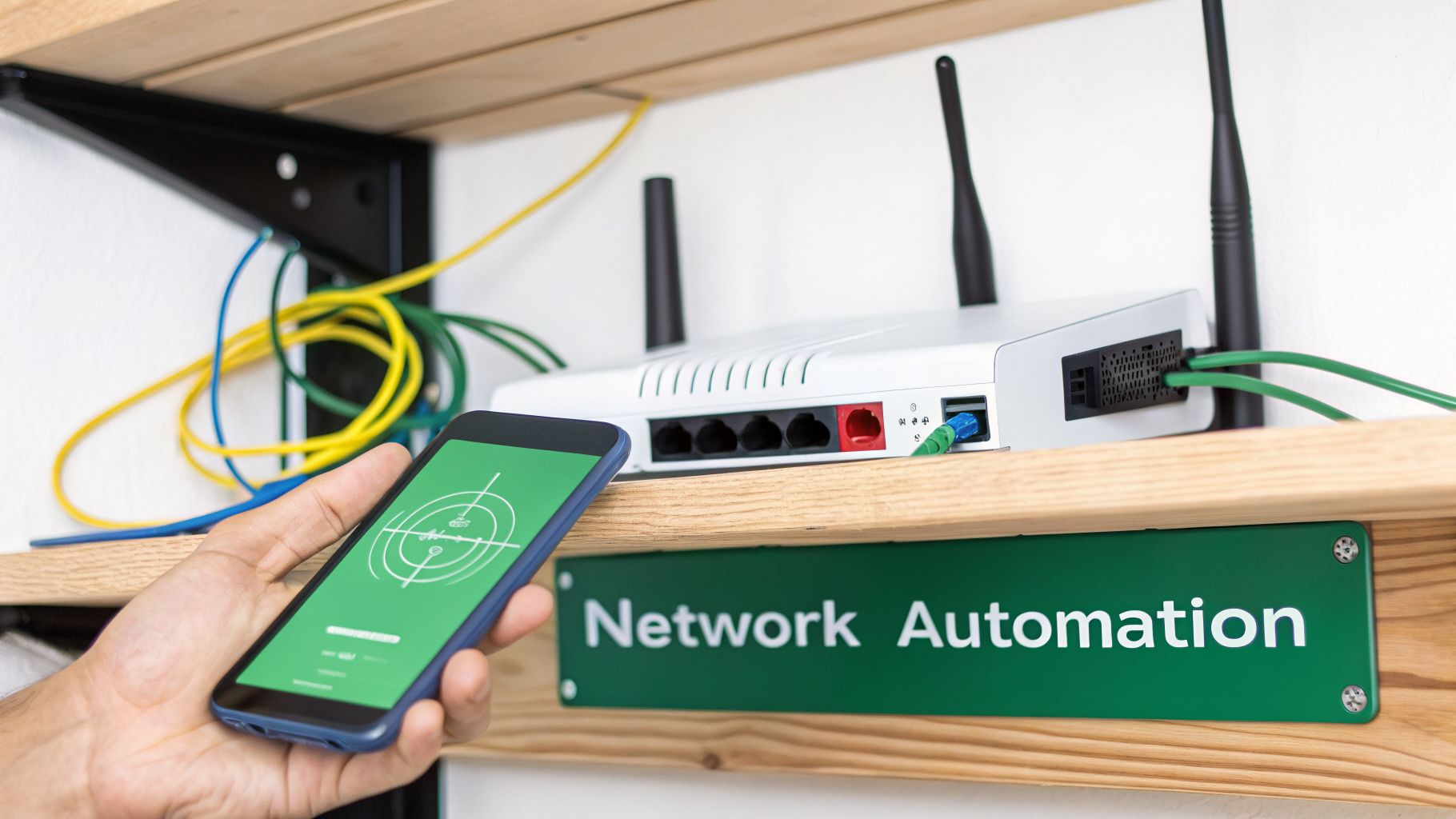
The image above captures the goal perfectly—managing your entire network from a simple, clean interface. The true power, though, is when this control is completely automated based on customer payments, which is exactly what a proper billing integration delivers.
How It Works for PPPoE and Hotspots
In the Nigerian market, you’ll typically run into two main setups where this kind of automation is a game-changer. A solid system like Centipid is built to handle both without breaking a sweat, as you can see in their official documentation on centipidbilling.com.
The first is PPPoE (Point-to-Point Protocol over Ethernet). This is the bread and butter for most fixed wireless and fibre-to-the-home (FTTH) providers. Once integrated, the entire customer lifecycle is automated:
A new customer signs up and pays for a monthly fibre plan.
The billing system immediately generates a unique PPPoE username and password.
It then pushes that profile straight to your MikroTik router, complete with the correct speed plan (e.g., 10Mbps) and any data limits.
The customer’s connection is activated instantly. They're online.
When the plan expires, if payment hasn't been received, the system automatically disables their PPPoE profile on the router, cutting off access until they pay. No phone calls, no manual logins.
The second common scenario is for Hotspots, which you see everywhere in public Wi-Fi zones like cafés, hotels, estates, and student hostels. The automation here is just as smooth:
A user connects to your Wi-Fi and is automatically redirected to your branded captive portal.
They select a data plan—maybe a 1-hour pass or a 1-day ticket—and pay right there on the portal.
The system creates a voucher code or a temporary user account and applies the right speed and time limits.
As soon as their time is up, access is automatically cut off.
If you want to get into the nuts and bolts of how this works, check out our guide on setting up a MikroTik RADIUS server. This is the core technology that makes the secure communication between your billing system and router possible.
By connecting your billing platform to your MikroTik router, you build a system that guarantees only paying customers can ever use your internet service. This single change can plug revenue leaks worth thousands of Naira every single month.
Gaining a Real Advantage Through Automation
This level of automation isn't just a nice-to-have feature; it’s a critical strategic advantage in Nigeria's competitive market. The ISP space is heavily dominated by the big players—MTN, Airtel, and Globacom hold a combined 95% of the market. And with new, agile competitors like Starlink entering the fray, efficiency is no longer optional for anyone. You can dive deeper into Nigeria's ISP market dynamics on Internet Society Pulse.
For a small or medium-sized ISP, you simply can't win by competing on price alone. Your advantage comes from running a tighter ship and offering a far better customer experience—both of which are direct results of smart automation.
Think about it. When a new subscriber can sign up, pay, and get online in less than a minute without needing to call anyone, you're already delivering a service that feels lightyears ahead of competitors still relying on manual activation. That seamless experience is what builds loyalty and gets people talking.
A Practical Roadmap for System Migration
Switching from old-school manual tracking to an automated ISP billing system in Nigeria can feel like a huge, intimidating project. I get it. But if you break it down into a few clear steps, it becomes much less stressful and a lot more manageable.
Think about it like moving your business into a new, modern office. You wouldn't just throw everything in boxes and hope it all works out. You'd have a plan. The same logic applies here. A solid process, much like good cloud migration planning, is the key to a smooth transition that doesn't disrupt your customers or your cash flow.
Step 1: The Planning and Audit Stage
Before you touch any new software, your first job is to figure out exactly who your customers are. This means a full audit of your current subscribers and how you manage them. This step is all about getting a clean picture of what you have, so you can decide what to keep and what to leave behind.
Your main goal here is simple: create a master list of every single active, paying subscriber. It’s time to dig into your spreadsheets, comb through bank statements, and even check those payment confirmation WhatsApp messages. This is your golden opportunity to finally clean up your records, spot who’s fallen behind on payments, and identify any "ghost" accounts that have been getting free internet on your dime.
Step 2: System Setup and Configuration
Alright, with your clean subscriber list in hand, it's time to set up your new digital headquarters. This is the hands-on part where you configure all your service plans and payment options inside a modern platform like Centipid.
This phase typically involves a few key actions:
Creating Your Service Plans: You'll need to recreate your internet packages (e.g., “10Mbps Home,” “25Mbps Business”) in the new system. Make sure you get the pricing, speeds, and data caps exactly right.
Connecting Your Payment Gateways: This is where you link up local payment processors like Paystack or Flutterwave. This is what allows your customers to pay you easily and automatically.
Configuring Network Integration: You’ll connect the billing system directly to your MikroTik router using the provided API. This is what makes the automation work. As the Centipid documentation shows, this link is what lets the system automatically manage who gets access to your network.
Trust me on this: spend the extra time here to get your plans and integrations set up perfectly. Rushing this step will cause major headaches later. A proper setup ensures the automation works flawlessly from the moment you go live.
Step 3: Data Migration and Go-Live
Now it’s time to move your customers in. With your new system fully configured and tested, you can start importing that clean list of subscribers you prepared earlier. The most important rule here is to perform a clean data migration.
This means you only bring over active, paying customers. Don't be tempted to import your old, messy spreadsheet. That just moves the old problems into your shiny new system. Start fresh.
Once your data is in and you've double-checked that everything works, it's time to pick a "go-live" day. Make sure you communicate this change clearly to your customers. Let them know about the new, easier way they can manage their accounts and make payments. On the big day, you flip the switch, and your new automated ISP billing system officially takes over, setting a new standard for how efficiently your business runs.
Using Your Billing System to Drive Revenue Growth
It’s easy to think of an ISP billing system as just a glorified invoicing tool—something that sends out bills and chases payments. But that’s a limited view. A modern billing platform is your secret weapon for actually growing the business, not just running it. It’s time to move past the day-to-day operations and start using it as a strategic tool to make smarter financial decisions.
Think about it: your billing platform holds all your most valuable business data. It knows which plans are selling, which customers are about to leave, and how people actually want to pay for your service. Learning to read these signs is the difference between an ISP that just gets by and one that truly thrives.
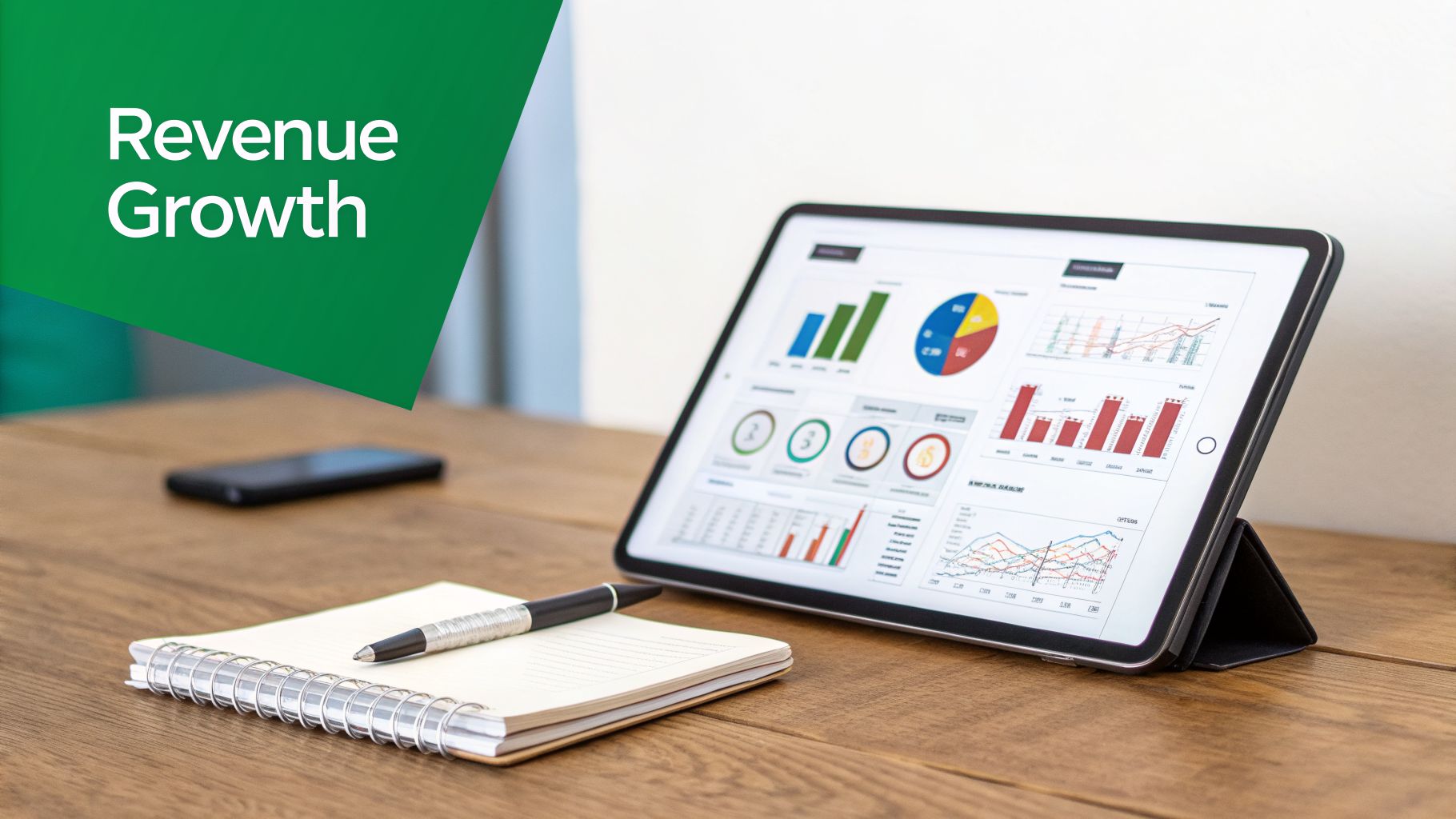
This is what your command centre should look like—a clear view that turns raw numbers into real-world business insights.
Test and Optimise Your Pricing Models
One of the biggest advantages of a flexible ISP billing system in Nigeria is the power to experiment with pricing without having to reconfigure your entire network. A good platform lets you quickly set up, test, and tweak different service plans to find out what clicks with your customers.
You can easily try out various models to see what works best in your area:
Recurring Subscriptions: The bread and butter for fixed wireless and fibre customers. Set up monthly, quarterly, or even annual plans for predictable revenue.
Voucher-Based Access: Perfect for hotspots in public spaces like cafés, hotels, or transport hubs. Sell access based on time (an hour, a day) or by data limits.
Tiered Plans: Create simple choices like "Basic," "Family," and "Pro" plans. Offering different speeds and data caps helps you appeal to everyone, from the casual browser to the power user.
The ability to launch and change these plans on the fly means you can react quickly to what the market wants or what your competitors are doing. No more waiting weeks for technical changes. You can see how to manage these plans in more detail on the official Centipid documentation.
Use Analytics to Pinpoint Growth Opportunities
Your billing system’s analytics dashboard is where the magic happens. It’s here that you stop guessing and start making decisions based on hard data, directly impacting your bottom line.
An effective analytics dashboard doesn't just show you numbers; it tells you a story about your business. It highlights your wins, exposes your weaknesses, and points you toward your next opportunity for growth.
Start by looking for these critical insights on your dashboard:
Most Profitable Services: Which plans are making you the most money? This tells you exactly where to focus your marketing budget and sales efforts.
Causes of Customer Churn: Why are people leaving? Is it after the first month? Is a specific high-tier plan seeing too many downgrades? This data is gold for fixing problems you might not even know you have.
Payment Recovery Success: See how well your automated payment reminders are working. You can track exactly how much revenue is being recovered without a single phone call from your team.
By automating all the tedious work of billing and network provisioning, your billing system gives you back your most valuable asset: time. You can step away from chasing payments and start analysing the business. These informed decisions, grounded in real numbers, are what will improve customer retention and grow your monthly recurring revenue. If you are juggling multiple payment methods, having a single place to track them is crucial. For ideas on managing this, have a look at our guide on the Lipa na Mpesa portal, as the principles apply across different systems.
Your Questions Answered: Nigerian ISP Billing
When you're looking at ISP billing software, a lot of practical questions come up. Let's tackle some of the real-world queries we get asked all the time by Nigerian ISP and hotspot owners.
Can I Still Use a Billing System if My Customers Pay with Cash or Bank Transfers?
That’s a great question, and the answer is a definite yes. Any billing system worth its salt for the Nigerian market has to be built for how business actually gets done here. That means handling more than just online payments.
While a platform like Centipid is fantastic for automating payments through gateways like Paystack, it's also designed for offline transactions. If a customer pays you in cash or does a direct bank transfer, your staff simply logs in, finds the customer's account, and marks their invoice as paid. The system instantly restores their internet service and updates your records. This keeps everything in one place, giving you a single, accurate view of all your revenue.
How Hard Is It Really to Connect This to My MikroTik Router?
On the technical side, this is a common worry. The good news is, connecting a billing platform to your MikroTik gear is designed for network admins, not software developers. You absolutely do not need to be a coder.
The process is mostly about copying the system’s API details into your router’s configuration so the two can talk to each other. Good providers give you clear, step-by-step guides and have support on standby to help. You can see exactly what’s involved in the Centipid documentation. This link between the software and your router is the magic that automates everything—managing users, controlling speeds, and cutting off non-payers without you lifting a finger.
Think of this integration as your automated gatekeeper. It ensures that only paying customers can access your network, instantly plugging one of the most common revenue leaks that growing ISPs face.
Is a Billing System Overkill for My Small ISP? I Only Have 50 Subscribers.
Not at all. In fact, bringing in an automated system when you're small is one of the smartest moves you can make. It's about building your business on a strong foundation.
Sure, you can probably manage 50 subscribers with a spreadsheet and a lot of manual follow-up. But those manual habits become a huge bottleneck when you hit 100, 200, or 500 customers. You'll quickly find yourself drowning in admin work instead of focusing on growth.
Starting with an automated system from day one frees you up to find new customers and make your service better. Modern platforms are priced to be affordable for small operators, scaling up as your business grows. It’s a tool that pays for itself by giving you back your most valuable asset: time.
Ready to stop juggling spreadsheets and start building a more profitable, automated ISP business? Centipid offers a purpose-built ISP billing system that integrates seamlessly with MikroTik and Nigerian payment gateways. Start your 14-day free trial and see the difference for yourself.