If you're trying to run a growing ISP by juggling a mess of spreadsheets, you’re setting yourself up for chaos. Think of an ISP subscriber management system as the central command centre for your entire network. It’s the brain that coordinates everything, from a new customer's first sign-up to their monthly payments and their actual connection to the internet. It gets rid of all those manual, mistake-prone tasks and pulls them into one automated platform.
Why Your ISP Needs More Than Spreadsheets
Imagine trying to direct aeroplanes at a busy airport with just a notepad and a walkie-talkie. It would be an absolute nightmare, inefficient, chaotic, and downright dangerous. For many new and growing Internet Service Providers (ISPs), relying on spreadsheets to manage subscribers creates that same level of operational risk and daily frustration.
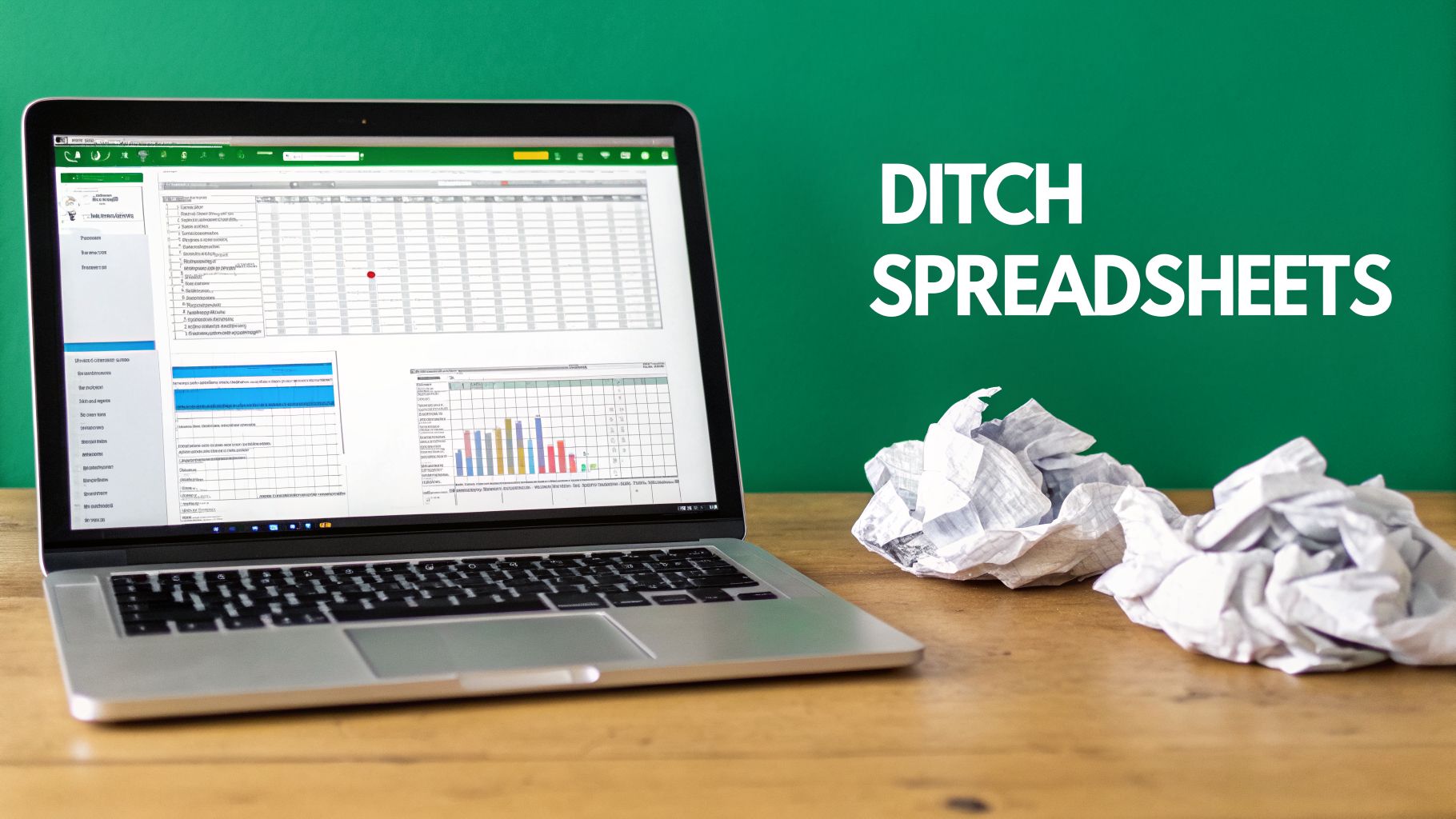
This manual approach always hits a wall. As your customer base grows, the administrative work explodes, creating a domino effect of problems that will absolutely stall your growth and eat into your profits.
The Daily Grind of Manual Management
When you're stuck in manual mode, your days are defined by inefficiency and putting out fires. The main headaches you’ll recognise are:
- Revenue Leakage: Trying to track payments by hand is a recipe for disaster. It leads to missed invoices, incorrect bills, and, worst of all, subscribers who stay connected long after their payment was due. That’s pure profit walking out the door.
- Poor Customer Experience: When a new subscriber signs up, they expect to get online now. If your team has to manually provision their account on a MikroTik RouterOS device, that delay creates a frustrated customer from day one.
- Wasted Staff Hours: Your skilled technical team ends up spending their days on mind-numbing tasks like creating user accounts, resetting passwords, and chasing down late payments. They should be focused on improving the network and planning for growth, not acting as admin clerks.
This constant firefighting simply isn't a sustainable way to run a business.
An ISP subscriber management system isn’t just another piece of software; it’s the central nervous system for your entire operation. It connects your billing, customer database, and network hardware into a single, automated workflow that just works.
Let's look at a quick comparison to see just how different daily life becomes when you move away from manual chaos.
Manual Methods vs Automated Systems
| Operational Task | The Manual Method Problem | The Automated System Solution |
|---|---|---|
| New Customer Onboarding | Tech staff must manually create PPPoE or hotspot user accounts. This causes delays and can lead to errors. | The system automatically creates and activates the user on the MikroTik router the moment a payment is confirmed. |
| Monthly Billing & Invoicing | Someone has to generate and send invoices one-by-one, often using email and spreadsheets. It's slow and easy to miss someone. | Invoices are generated and sent to all subscribers automatically on a set schedule. No one is forgotten. |
| Payment Collection | You have to manually track bank deposits or M-PESA messages and reconcile them against a list of subscribers. | Payments are automatically processed and reconciled through integrated gateways like M-PESA, debit, or credit cards. |
| Service Disconnection | Overdue accounts have to be found and disconnected manually by a technician, often days after payment was due. | The system automatically suspends or disconnects service for non-payment and reactivates it instantly upon payment. |
| Customer Support | Simple requests like password resets or plan upgrades require a staff member to handle them, creating support tickets and delays. | Subscribers can manage their own accounts, reset passwords, change plans, and view usage through a self-service portal. |
The difference is clear: one path leads to operational bottlenecks and wasted resources, while the other paves the way for scalable growth.
The Automated 'After' Scenario
Now, picture the 'after' scenario with a proper platform in place. A centralised ISP subscriber management system, like the one we've built at Centipid, completely transforms your operations from top to bottom.
When a new customer pays for a plan, their PPPoE or hotspot account is instantly created on your MikroTik router without anyone on your team lifting a finger. It just happens.
This automation runs through the entire customer journey. Recurring invoices are sent out like clockwork, payments are handled by the system, and network access is automatically managed based on a subscriber's payment status. This creates a seamless, hands-off operation that runs 24/7. As you can explore in our platform's documentation, this deep integration turns your MikroTik hardware from a simple router into an intelligent engine for your business, finally freeing you to focus on expansion instead of endless administration.
The Core Features That Unlock ISP Growth
It’s easy to think of an ISP subscriber management system as just a list of features. But that’s like describing a car by just listing its parts, engine, wheels, steering wheel. The real magic isn't in the parts themselves, but in how they work together to get you where you’re going. The same goes for a modern management platform; its core features are the interconnected engines that drive your revenue, efficiency, and customer happiness.
These tools are what shift your business from a manual, reactive operation into a proactive, automated one. Let's dig into the essential components and see the real-world results they deliver.
Automated Provisioning and Access Control
Getting new customers online quickly and managing their access is the foundation of any ISP. This is where automated provisioning comes in, instantly handling new sign-ups without anyone on your team needing to lift a finger. When a customer signs up and pays, the system talks directly to your network hardware to get them connected.
For example, a platform like centipidbilling.com integrates directly with MikroTik RouterOS and can automatically handle tedious jobs:
- Create PPPoE or Hotspot Users: As soon as a payment is confirmed, a new user account is instantly created in your router.
- Assign Bandwidth Plans: The system applies the correct speed and data limits based on the package the subscriber chose.
- Enforce Access Rules: If a payment is missed, the system can automatically suspend the account. Once the balance is paid, it’s just as easily reactivated.
Recurring Billing and Integrated Payments
Consistent cash flow is the lifeblood of your business. A good ISP subscriber management system automates your entire revenue cycle, from invoicing and reminders to payment collection, making your income predictable and secure. This is about much more than just sending an email reminder.
A truly automated billing engine doesn't just ask for money; it collects it. By integrating with local payment gateways, it removes the friction that causes late payments and revenue leakage.
For ISPs in Kenya, this means deep, seamless integration with M-PESA. Your customer gets an automated invoice via SMS or email and can pay straight from their phone. As detailed on docs.centipidbilling.com, the system automatically detects that payment, marks the invoice as paid, and updates the subscriber’s account status. This completely hands-off process frees you from the administrative headache of chasing payments and updating spreadsheets.
The Power of Subscriber Self-Service
Think about how much time your team spends on simple requests like password resets, plan upgrades, or sending out old invoice copies. A subscriber self-service portal is a game-changer, giving your customers the power to manage these tasks themselves. This simple addition can slash your support tickets and free up your team to focus on more important issues.
A branded portal from a platform like centipidbilling.com gives your subscribers a secure, central place to:
- View and pay their invoices online.
- Check their data usage and see their plan details.
- Upgrade or downgrade their service package anytime.
- Update their personal contact and payment information.
Ultimately, these core features all work together in a powerful loop. Automated provisioning provides instant access, integrated billing secures your revenue, and self-service portals boost customer satisfaction while lowering your costs. Together, they create a streamlined workflow that lets you scale your network without scaling your headaches.
Automating Your Network with MikroTik RouterOS
For any growing ISP, your MikroTik hardware is the heart of the network. But let’s be honest, without the right automation, that powerful hardware can quickly become your biggest operational headache. The connection between your management software and MikroTik RouterOS isn’t just a nice-to-have; it’s what turns a great router into a self-running business engine.
Think of an ISP subscriber management system as the central brain that tells your routers what to do based on what your customers are doing. This deep integration, especially with RouterOS v7, gets rid of countless hours of tedious, error-prone manual tasks. It’s the bridge that connects a customer’s payment to their network access, ensuring your rules are enforced automatically and immediately.
From Manual Commands to Automated Workflows
Picture this familiar scenario: a new customer wants to sign up for your Wi-Fi service. The old way involves a technician logging into the router, manually creating a user account, setting a password, and assigning a bandwidth limit. It's slow, clumsy, and simply won't work once you have more than a handful of subscribers.
Now, imagine that same process with an integrated system from centipidbilling.com. The customer finds your service online and pays for a package. Instantly, the system talks to your MikroTik router and handles everything:
- It instantly creates a PPPoE or hotspot account, no hands needed.
- It assigns the correct bandwidth plan, applying the exact speed limits the customer paid for.
- It logs the transaction and activates the service, keeping your records clean and up-to-date.
This kind of automation shifts your MikroTik router from being a passive piece of kit to an active, revenue-generating part of your business.
The real magic of this integration is creating a "set it and forget it" environment. Your router becomes a smart enforcer that reacts to billing events automatically. This frees up your technical team to focus on expanding the network instead of getting bogged down in day-to-day admin.
Real-World Automation Use Cases
Connecting your billing platform directly to RouterOS unlocks some incredibly powerful, hands-off features that are fundamental for a modern ISP. As documented on docs.centipidbilling.com, this isn't just about creating new accounts; it's about managing the entire customer journey.
1. Dynamic Bandwidth Management A subscriber decides they need more speed and upgrades their plan through your self-service portal. The system immediately updates their bandwidth profile on the MikroTik router. No support tickets. No manual tweaks. The change happens the moment they pay, giving them the instant gratification they expect.
2. Automated Service Suspension and Reactivation This is a game-changer for cash flow. If a subscriber's payment is late, the management system can automatically disable their PPPoE or hotspot account. The second they clear the outstanding balance, the system just as quickly reactivates their service. All of this happens without a single phone call or manual command from your team.
3. On-the-Fly Hotspot Voucher Generation If you run public Wi-Fi in places like cafes, hotels, or transport hubs, a platform like Centipid lets you generate hotspot vouchers in bulk right from your dashboard. You can print and sell them, and the system takes care of managing their usage and expiry on the MikroTik router automatically. To see just how far you can take this, check out our detailed guide to automating your MikroTik network.
4. Captive Portal Deployment A proper ISP subscriber management system makes deploying branded captive portals for your public Wi-Fi hotspots surprisingly simple. You can manage the entire login experience, from the welcome page to the service plans and payment processing, directly from the portal, all of which is controlled and served through your MikroTik device. This creates a polished and professional user experience that builds trust and drives sales.
By tying your subscriber management directly into your network hardware, you’re building a robust, scalable, and highly efficient operation, one that can grow without piling on more administrative costs.
How to Choose the Right Subscriber Management System
Picking the right ISP subscriber management system is one of the most critical decisions you'll make for your business. It’s far more than just ticking boxes on a feature list, you’re choosing a long-term partner that will directly influence your path to growth.
This single choice will shape your day-to-day efficiency, your ability to expand, and, at the end of the day, your bottom line.
A bad decision here can trap you. You might find yourself locked into a system that causes more problems than it solves, battling everything from surprise fees and scalability walls to frustrating hardware conflicts. To avoid these pitfalls, you need a clear framework for evaluating what really matters for a growing ISP, looking past the shiny marketing claims.
Evaluating Scalability and Future Growth
The very first question you should ask is simple: can this system grow with my business? The platform that works well for your first 100 subscribers needs to perform just as flawlessly when you hit 1,000, 5,000, or even 10,000.
Real scalability isn't just about handling more user accounts. It's about maintaining performance, speed, and responsiveness without your costs spiralling out of control.
Think about a system like Centipid, which is built on modern cloud infrastructure. This design allows it to scale effortlessly, ensuring your management dashboard stays quick and reliable whether you're managing a single MikroTik router or a sprawling network. You don’t want to be forced into a messy and expensive migration in two years because you outgrew your initial choice.
Seamless Hardware and Payment Gateway Integration
For any system to be useful, it has to play nicely with the gear you already own. For most ISPs and hotspot operators, this means deep, reliable integration with MikroTik RouterOS. The platform should be able to handle user provisioning, manage bandwidth, and apply policies on your routers automatically, without needing constant manual intervention.
If you want to see how this works in practice, the Centipid documentation gives a good overview of the process.
Just as important is connecting with local payment gateways. In a market like Kenya, having built-in support for M-PESA is not just a 'nice-to-have', it's essential for doing business. Your system needs to automate payments and reconciliation, making it easy for customers to pay you and ensuring you get your revenue on time, every time.
A study on Kenyan ISPs highlights a significant gap: larger firms use extensive automation tools while smaller players lag behind. This creates an urgent need for scalable solutions that provide enterprise-grade features, like automated billing and network management, to help smaller hotspot operators and multi-location ISPs compete effectively. You can read the full research on ISP technology adoption in Kenya to understand this divide.
This technology gap is exactly what a modern ISP management platform is designed to bridge. It gives smaller operators access to powerful tools without the hefty enterprise price tag. For more on this, you might find our guide on how to choose the best billing system for wireless ISPs helpful.
Analysing Security, Compliance, and Pricing
Never, ever cut corners on security and compliance. The platform you choose will be the custodian of sensitive customer data and financial records. Make sure it uses industry-standard encryption and is hosted on secure, reliable infrastructure to protect both your business and your subscribers.
Finally, take a hard look at the pricing model. You need to understand it completely to avoid hidden costs that can cripple your budget down the road. Some providers use complex fee structures that make it impossible to predict your monthly bill.
Look for total transparency. Centipid, for example, offers clear, straightforward pricing: a simple per-user fee for PPPoE subscribers and a flat percentage-based plan for hotspot operations. This approach lets you forecast your costs with confidence as your subscriber base grows.
Here are the five critical questions you need to answer:
- Scalability: Can the system grow from a few hundred to thousands of subscribers without breaking a sweat?
- Hardware Integration: Does it offer solid, dependable integration with your network equipment, especially MikroTik RouterOS?
- Payment Gateways: Does it support the payment methods your customers actually use, like mobile money?
- Security: Is your data, and your customers' data, properly protected with strong encryption and secure hosting?
- Pricing: Is the pricing model transparent and predictable, allowing your costs to scale alongside your revenue?
By carefully assessing these five areas, you can select an ISP subscriber management system that doesn't just fix today's operational headaches but also provides a rock-solid foundation for your future success.
Turning Data Into Dollars with ISP Analytics
A top-notch ISP subscriber management system does far more than just put routine tasks on autopilot. Its real value lies in giving you the hard data needed to make smarter business decisions. This is where automation stops being about convenience and starts driving real profitability, moving you from guesswork to a clear understanding of what makes your business tick.
Think of your management platform as the 'black box' for your entire operation. It logs every crucial event, from new sign-ups and payments to network usage and customer cancellations. When this data is organised and presented on a clear dashboard, it gives you the concrete return on investment (ROI) you need, proving the system’s worth far beyond just saving time.
Tracking the Metrics That Matter
If you want to turn that data into actual revenue, you need to track the numbers that truly matter. These are your Key Performance Indicators (KPIs), the vital signs that give you a real-time health check on your business and shine a light on growth opportunities. A good ISP management system makes keeping an eye on these completely effortless.
Here are the core metrics you should be watching:
- Monthly Recurring Revenue (MRR): This is the lifeblood of any subscription business. It’s your predictable monthly income, offering the clearest picture of whether your ISP is growing or shrinking.
- Customer Churn Rate: This is the percentage of subscribers who leave you each month. A high churn rate can be a silent killer, so monitoring it helps you spot and fix problems before they get out of hand.
- Payment Success Rates: Are your automated payments going through on the first attempt? A low success rate points to problems with your payment gateway or customer communication, both of which directly choke your cash flow.
- Average Revenue Per User (ARPU): This metric tells you how much an average customer is worth to your business. Tracking ARPU is perfect for measuring how well your efforts to upsell new plans or add-on services are paying off.
These numbers are the foundation of a data-driven strategy. For example, a sudden dip in MRR could be your cue to launch a new promotion. A spike in your churn rate might point to a network issue that requires your immediate attention. It's about getting to the bottom of the 'why' behind the numbers, a process similar to transforming customer support data into actionable reports.
From Raw Data to Actionable Insights
Imagine looking at a single screen that gives you a complete, easy-to-read summary of your entire operation. This is where the power of a modern ISP subscriber management system truly shines.
A well-organised analytics dashboard doesn't just show you numbers; it tells a story about your business. It reveals where revenue is coming from, which plans are flying off the shelves, and, crucially, where you might be losing customers.
This is the kind of actionable data that should be driving your strategy. You can adjust your pricing, introduce new packages, or focus your marketing with confidence because your decisions are backed by hard evidence, not hunches. This ability to manage growth is critical. As a real-world example, Starlink exploded onto the scene in Kenya, becoming the country’s seventh-largest ISP with 19,146 subscribers by December 2024. This report on Starlink's growth in Kenya highlights just how fast the market can shift. Without a robust system to track, bill, and manage that flood of new subscribers, such rapid expansion can easily turn into chaos instead of profit.
Your Go-Live Implementation Checklist
Moving to a new subscriber management system is a huge step towards automating your ISP operations. But let's be honest, the switch itself can feel daunting. A successful launch really boils down to having a clear, practical plan. This checklist isn't just a technical to-do list; it’s your guide to getting everything right from the start, sidestepping common headaches, and making sure your new platform works for you on day one.
Think of this process less as a technical hurdle and more like organising your business for serious growth. Each step builds on the last, creating a solid foundation for your new, automated network.
Phase 1: Initial Setup and Configuration
Before you can even think about moving your customers over, you need to build the core of your business inside the new system. This is where you define what you sell and how you get paid.
- Audit and Define Your Service Packages: Start by looking at what you currently offer. You'll need to recreate these as distinct service plans in the new system. For each one, define the important bits: upload/download speeds, data caps, and, of course, the price. You're essentially turning the rows on your old spreadsheet into real, automated products your customers can choose from.
- Configure Billing Cycles and Payment Gateways: Next, set up your billing schedules. Will you charge customers monthly, quarterly, or annually? This is also the crucial point where you connect your payment gateways. For any ISP in Kenya, for example, integrating a Lipa na M-PESA portal is absolutely essential for automating collections and keeping cash flow healthy.
- Connect Your Network Hardware: Now it's time to link the software to your network gear. On a platform like centipidbilling.com, this means adding your MikroTik router and setting up the API connection. Once that's done, the software can start talking to your router and managing subscribers automatically. This is a core part of building your ISP subscriber management system.
Phase 2: Data Migration and Final Testing
With the basic framework in place, it’s time to bring your existing customer data on board and run some final checks. Don't rush this part. A careful, methodical approach here is what prevents service disruptions and frustrated customers down the line.
A clean data import is the bedrock of a successful migration. Seriously, take the time to audit your existing subscriber lists. Remove duplicates, fix typos, and correct errors before you import anything. This simple act can prevent countless support tickets later on.
Once you're live, your new system will enable a powerful feedback loop: you'll track performance, optimise your services, and grow your revenue.
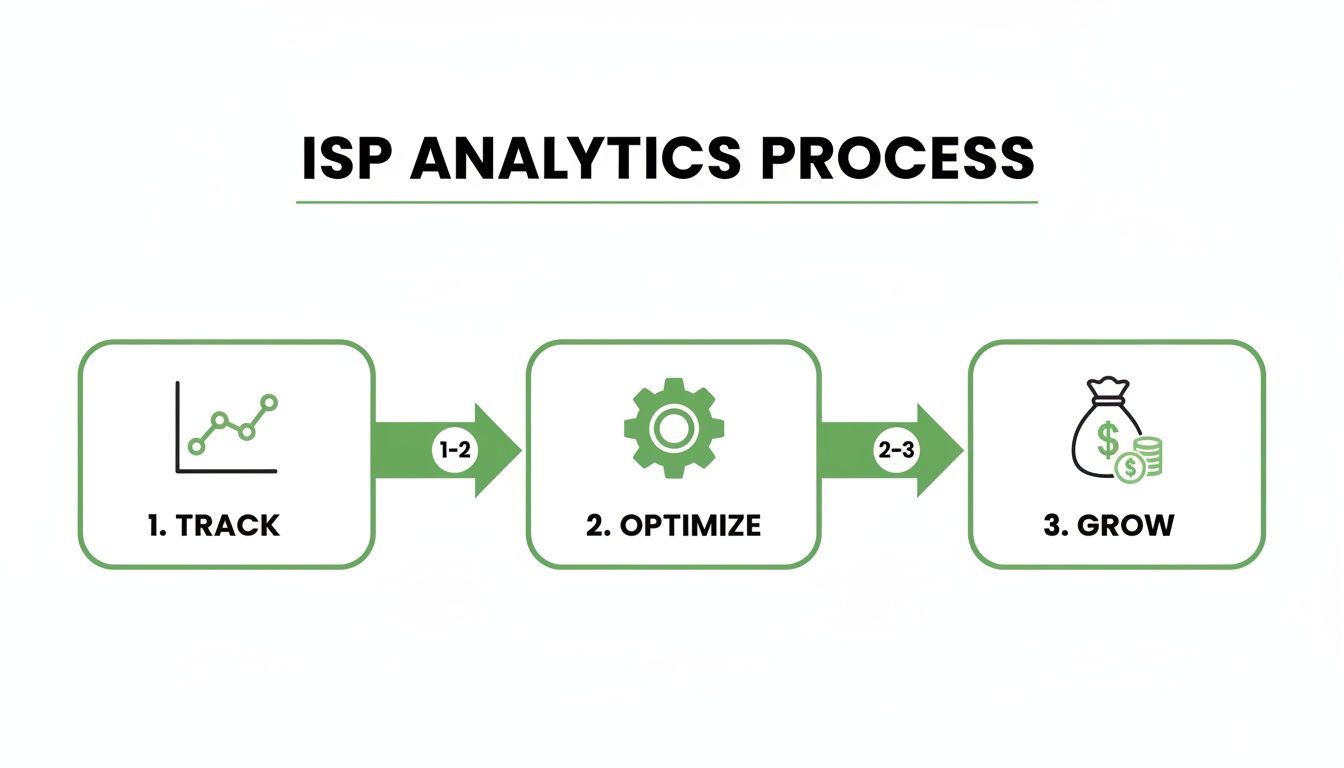
This process shows how ongoing data analysis directly fuels business growth and helps you make your services even better.
- Import Customer Data: Use the platform’s tools, usually a CSV import function, to transfer your cleaned-up subscriber information. Platforms like Centipid often provide free support and a 14-day trial to help you get this right without any pressure.
- Run Final Tests: Before you flip the switch, create a few test accounts. Go through the entire customer journey: sign up for a plan, check that the user is created properly on the MikroTik router, and simulate a payment. Make sure the whole workflow is seamless.
- Notify Your Subscribers: This is it! Let your customers know about the upcoming change. Introduce them to their new self-service portal, explain how the new billing will work, and get them excited about the benefits, like easier payments and better service management.
Frequently Asked Questions
When you're thinking about an ISP subscriber management system, a lot of questions come to mind. Let's walk through some of the most common ones we hear from providers who are ready to grow their business and automate their daily tasks.
Can I Migrate My Existing Subscribers from Spreadsheets?
Absolutely. In fact, this is how most growing ISPs get started. We see it all the time. Moving away from spreadsheets might seem daunting, but modern platforms like Centipid are built for this exact transition.
As shown on docs.centipidbilling.com, you can simply import your customer data using a CSV file. This file would contain all your essential subscriber details, names, contacts, and their current service plans. The goal is to avoid tedious manual entry and get your new system up and running in no time.
Does This System Work with Multiple MikroTik Routers?
Yes, and this is one of the most important features for a growing network. A good ISP subscriber management system is designed to handle a network that stretches across several locations or uses many different routers.
For example, on centipidbilling.com, you can add and manage all your MikroTik routers from one central dashboard. This is perfect if you’re expanding your coverage area or running separate networks for hotspots and PPPoE clients.
The ability to centrally manage all your routers is key to scaling efficiently. It ensures consistent policy enforcement across your entire network without needing to log into each device separately.
What Happens If a Customer's Payment Fails?
This is where automation really shines, protecting your revenue without you having to chase down payments. When a payment doesn't go through, the system automatically kicks off a pre-set process.
Typically, this involves sending customised payment reminders via SMS or email (often called dunning). If the bill remains unpaid, the system can temporarily suspend the customer’s internet access. As outlined at docs.centipidbilling.com, the moment the customer pays the outstanding invoice, their service is restored automatically. This entire loop closes without needing any manual work from you or your team.
Ready to see how a modern ISP subscriber management system can transform your operations? Centipid Technologies Ltd. offers a powerful, easy-to-use platform designed for growing ISPs. Start your free 14-day trial today!