When we talk about an ISP billing system Uganda needs, we’re not just talking about a tool that sends out invoices. It's much more than that. Think of it as the operational command centre for your entire business, tying together subscriber management, payment processing, and even network access control into one smooth, automated workflow. For any ISP serious about growing in Uganda's fast-paced internet market, this isn't a luxury; it's essential.
Why Modern ISP Billing Is Crucial for Ugandan ISPs
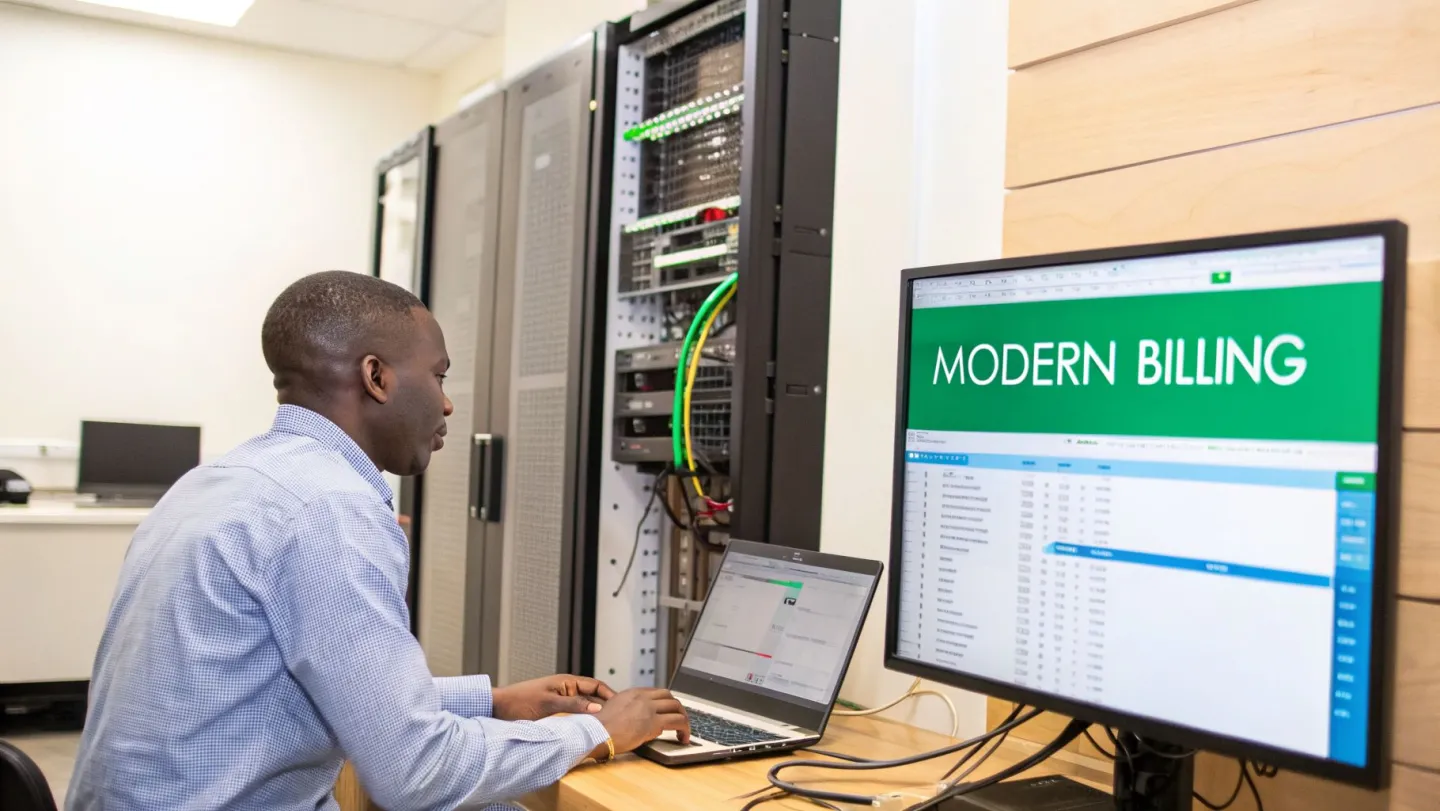
If you’re still wrestling with spreadsheets and manually chasing down late payments, you’re running your ISP the hard way. As internet usage in Uganda continues to climb, a modern ISP billing system has gone from a "nice-to-have" feature to an absolute necessity for survival and growth.
It's like upgrading from a dusty old calculator to a complete financial and operational dashboard. This system becomes the central nervous system of your ISP, connecting how you manage subscribers, control your network hardware (like MikroTik), and collect revenue into a single, cohesive unit.
To give you a clearer picture, let's compare the old way of doing things with a modern, automated approach.
Manual vs Automated ISP Billing in Uganda
| Feature | Manual Billing (The Old Way) | Automated Billing (The Modern Way) |
|---|---|---|
| Invoicing | Manually created and sent via email or printouts. Prone to errors. | Invoices are generated and sent automatically on a set schedule. |
| Payments | Relies on bank deposits or cash, requiring manual reconciliation. | Integrates with mobile money and card gateways for instant, automatic payment records. |
| Account Suspension | An engineer has to manually log in and disable non-paying accounts. | Automatically suspends overdue accounts and restores service the moment payment is made. |
| Customer Support | Staff spend hours on basic queries like "What's my balance?". | A self-service portal lets customers check balances, pay bills, and change plans 24/7. |
| Reporting | Requires hours of spreadsheet work to get a basic view of revenue. | Generates real-time financial and operational reports with just a few clicks. |
The difference is night and day. Automation doesn't just save time; it plugs revenue leaks and professionalises your entire operation.
Escaping Operational Chaos
Without a proper system, your daily operations can quickly become a tangled mess. Your team ends up spending countless hours matching payment records, manually kicking non-paying customers off the network, and answering the same account questions over and over. This manual work isn't just slow, it's a breeding ground for human error, which leads to billing disputes and unhappy customers.
A modern ISP billing system Uganda can use, like Centipid, automates these repetitive jobs. For example, as detailed at https://docs.centipidbilling.com, the system can automatically:
- Generate and email invoices on schedule.
- Process payments from integrated mobile money gateways.
- Block network access for overdue accounts and unblock them instantly once paid.
- Give customers a self-service portal to manage their own accounts.
This level of automation frees your team to focus on what actually grows the business: improving the network, finding new customers, and offering top-notch support.
By automating the entire subscriber lifecycle, from sign-up and provisioning to billing and suspension, you transform your operations from a reactive, manual process into a streamlined, efficient machine. This shift is fundamental to scaling an ISP business in a competitive market.
Gaining a Competitive Edge
In a growing market like Uganda's, how you deliver your service is what sets you apart. Offering a smooth, professional experience can make you the obvious choice over competitors stuck in the past. An automated billing platform delivers that polished feel from day one. New subscribers can sign up online, pay, and get connected in minutes, all without needing to speak to a single member of your staff.
This efficiency does more than just make customers happy; it builds your brand's reputation as a modern, reliable, and professional organisation. It shows you're serious about your business.
To get a broader perspective on how automation is changing the game across the continent, check out our guide on ISP billing software in Africa. At the end of the day, a solid billing system is the foundation for real growth, helping you manage more customers with less effort while securing your revenue for the long haul.
Integrating Mobile Money for Instant Payments
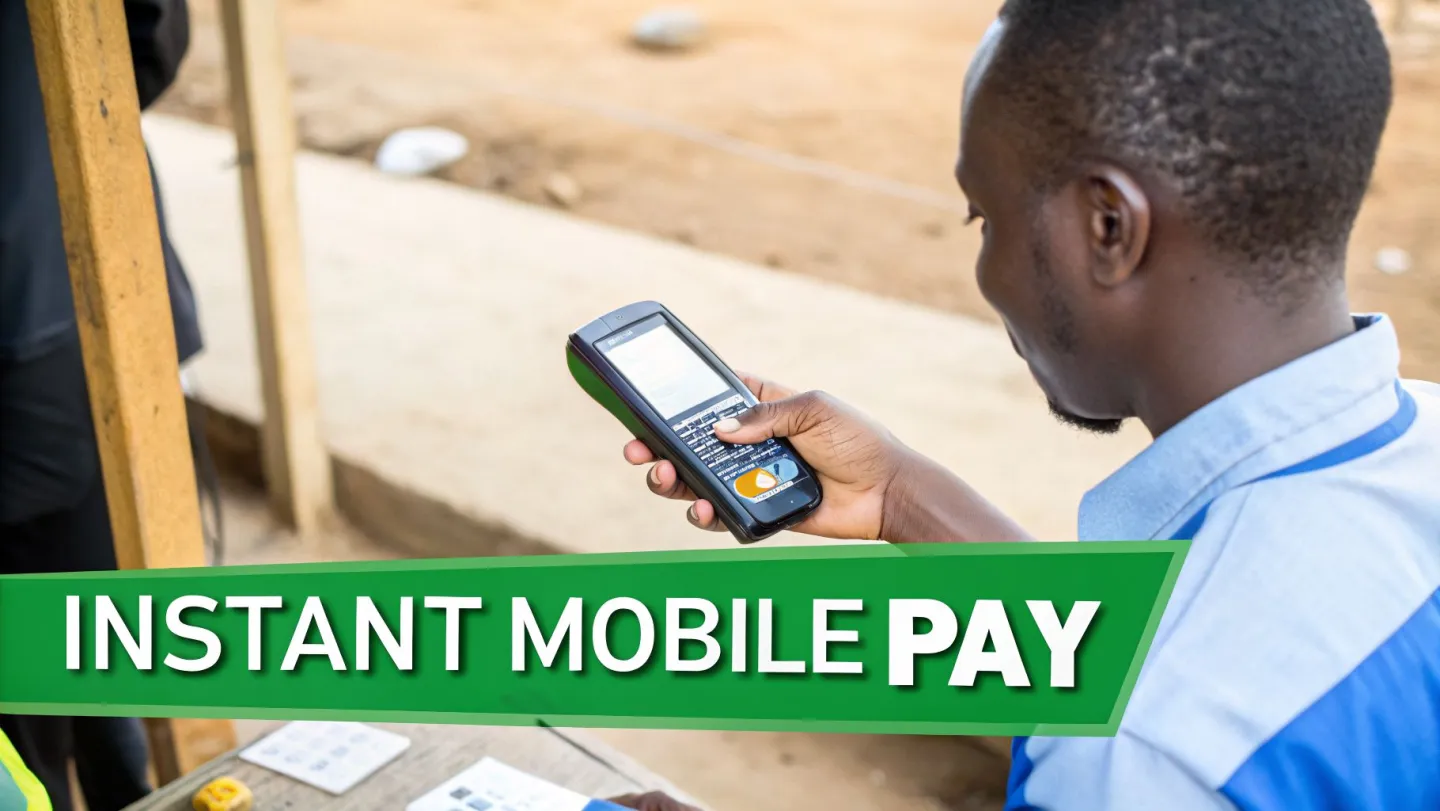
Let's be blunt: in Uganda, mobile money isn't just a way to pay, for a massive portion of the population, it's the only way. If you're an ISP, and your billing system doesn't plug directly into this ecosystem, you're creating roadblocks for your customers and yourself. This friction slows down your cash flow and hands a serious edge to your competitors.
Think about the old way of doing things. You send an invoice, and your customer has to find the time and money to travel to your office or a bank just to settle their bill. It’s an inconvenient, costly journey that’s a major cause of late payments. In today's market, that kind of hassle is a liability you can't afford.
From Manual Hassle to Automated Flow
Now, let's paint a different picture. Your billing system automatically generates an invoice and shoots it to the customer via SMS. They get the alert on their phone, tap a link, and settle the bill in seconds using their MTN Mobile Money or Airtel Money wallet.
But here’s where the real magic is. The moment they pay, the system instantly logs the transaction, marks the invoice as paid, and, if their connection was suspended, immediately restores their internet. This entire loop can take less than a minute, with absolutely zero manual intervention from your team.
This is the kind of automation a modern ISP billing system Uganda absolutely requires. A platform like the one found at centipidbilling.com is built from the ground up for this exact workflow, transforming a clunky, multi-day process into a smooth, instantaneous transaction. It's not just about making things easier; it’s about locking in revenue and providing an experience that keeps customers happy.
Why Native Integration Is Non-Negotiable
It’s difficult to overstate how dominant mobile money has become. One piece of research tracking the boom in pre-digital financial services showed that by August 2020, Uganda was already home to 18.9 million active mobile money users. That's a staggering number, and it makes a native mobile money integration non-negotiable for any serious ISP. This is precisely the gap the Centipid system, documented at https://docs.centipidbilling.com, was designed to fill for MikroTik-based providers. You can read more about these telecom market shifts and their impact on billing.
Any worthwhile billing system must provide:
- Direct API Integration: A live connection to mobile money gateways to get real-time payment confirmations.
- Automatic Reconciliation: The system must automatically match every payment to the right customer and invoice, killing manual data entry for good.
- Instant Service Activation: The software needs to talk directly to your network gear, like a MikroTik router, to switch services on or off the moment a payment is made.
This closed-loop automation is the key. It transforms your billing from a passive record-keeper into an active, revenue-collecting engine that works around the clock.
The Impact on Your ISP Business
Bringing in a system with solid mobile money integration does more than just speed up payments; it fundamentally changes your business for the better.
Key Business Benefits
| Benefit | Description |
|---|---|
| Reduced Collection Costs | Automating payments and follow-ups frees up your team from the thankless job of chasing late payers. |
| Improved Cash Flow | Payments hit your account instantly, not weeks later after someone has had time to reconcile a bank statement. |
| Enhanced Customer Loyalty | A fast, painless payment process makes customers feel valued and gives them one less reason to look elsewhere. |
| Operational Efficiency | Your staff can stop babysitting spreadsheets and start focusing on growing the business, like expanding the network or improving support. |
This is especially true for providers who juggle both PPPoE subscriptions and public hotspot services. Being able to manage both through one unified, automated payment system is a massive win for efficiency.
If you’re curious about the technical side of these payment workflows, you can learn more about how ISP billing integrates with M-PESA and other mobile money systems. At the end of the day, running an ISP in Uganda without robust mobile money integration is like opening a shop that refuses to accept the local currency. You're simply not set up for business.
Getting Your MikroTik Routers Under Control
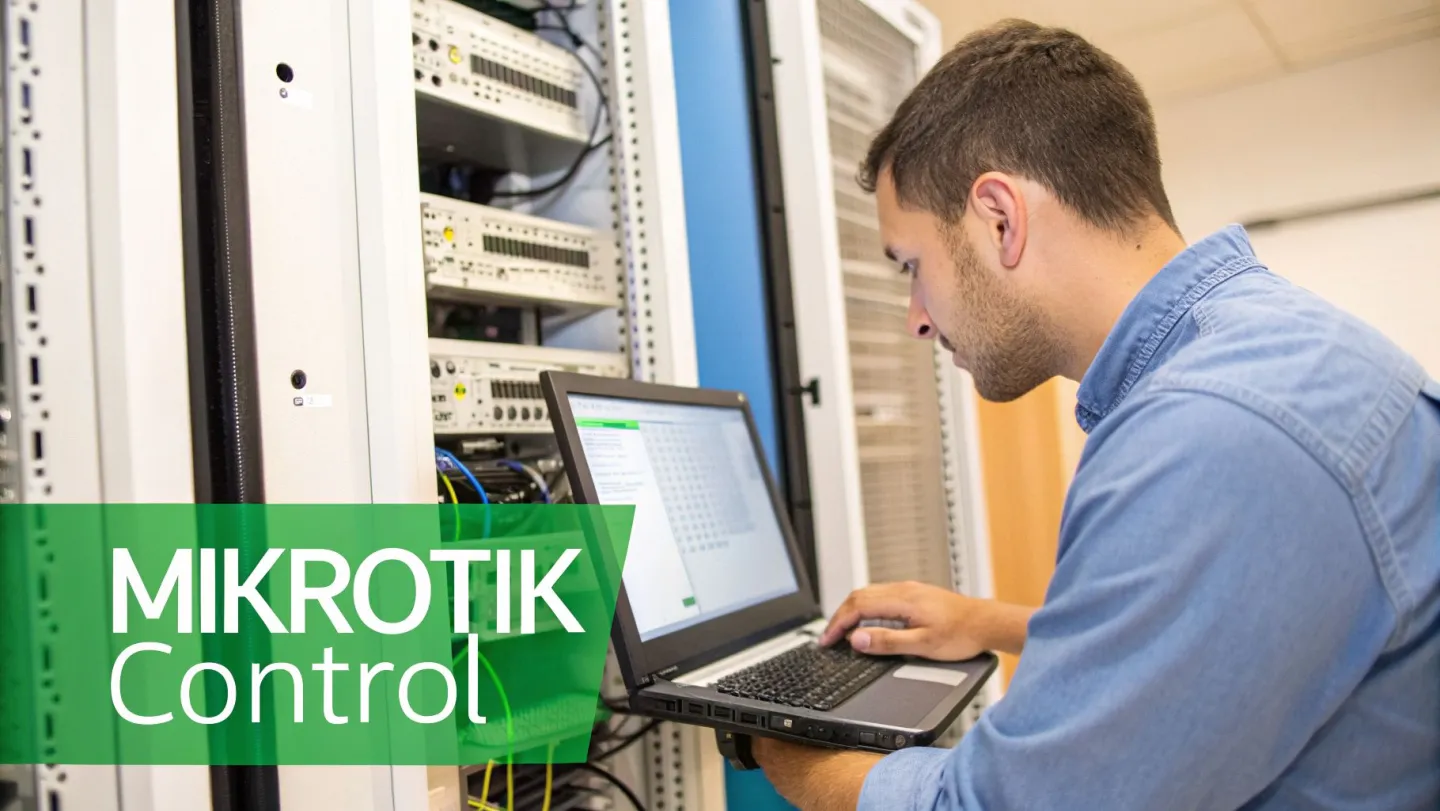
If you're running an ISP in Uganda, there's a very good chance that MikroTik routers are the heart of your network. They're powerful, reliable, and get the job done. But let's be honest, managing them manually is a constant headache. You're stuck in a loop of creating user profiles, fiddling with speed limits, and individually kicking non-paying customers off the network.
This isn't just slow work; it's a huge operational bottleneck. Every time a new customer signs up, someone on your team has to log in and configure their access. Every late payment means another manual suspension. This hands-on approach eats up valuable time and simply won't work as you try to grow your subscriber base.
Giving Your Hardware a Brain
The secret is to pair your powerful MikroTik hardware with an intelligent billing system. A platform like the one from centipidbilling.com acts as the central 'brain' for your network, connecting directly to your routers via their API. It transforms your hardware from a collection of passive devices into a single, automated, self-managing system.
It’s like giving your technical team a master control panel for the entire network. Instead of logging into each router, the billing platform sends commands automatically based on what’s happening with your customer accounts.
Think of it this way: your billing system figures out who gets internet and what speed they get. Your MikroTik router is the muscle that actually enforces those rules on the network. When the two are integrated, the entire operation runs on autopilot.
When a customer's payment comes through via mobile money, for instance, the billing system instantly pings the router to reconnect their service. The whole thing happens in seconds, without a single technician lifting a finger.
Automating the Day-to-Day Grind
Let’s face it, most of the "network management" your team does is just repetitive admin work, creating users, changing plans, and suspending accounts. An integrated ISP billing system Uganda ISPs can rely on, automates these tasks entirely for both PPPoE and Hotspot users, as you can explore at https://docs.centipidbilling.com.
Here’s what that looks like in practice:
- Automatic User Creation: A customer signs up on your website and pays. The system immediately creates their user profile on the correct MikroTik router with the right credentials. No more manual setup.
- Bandwidth Shaping: The system automatically sets the correct upload and download speeds based on the internet package the customer chose. They get exactly what they paid for, every time.
- Service Suspension & Reconnection: If an invoice is overdue, the system automatically disconnects the user. As soon as that payment is made, it instantly restores their service. Your team doesn’t have to chase anyone.
This frees up your technical staff from the tedious work. Instead of being stuck behind a keyboard managing user accounts, they can focus on what really matters, improving network quality, expanding your coverage area, and solving real customer problems.
Adding a Professional Polish to Your Service
Proper integration does more than just automate the basics. It unlocks advanced features that make your service more robust and professional, giving you an edge over the competition.
Practical Features You Can Implement:
| Feature | Description |
|---|---|
| Captive Portals | For hotspot services, you can set up branded login pages. This is where users can buy data bundles, enter voucher codes, or sign in. A system like Centipid, as seen on centipidbilling.com, lets you manage these pages right from your billing dashboard. |
| Fair Usage Policy (FUP) | To prevent network abuse, you can set rules that automatically slow down a user's speed after they've used a certain amount of data. This ensures a better experience for all your customers. |
When these features are controlled from one central system, it makes your entire operation look and feel more organised and reliable. To get a better handle on the technical side, you can learn more about how to optimise your MikroTik integration. By taking this step, you turn your network from a high-maintenance liability into your most powerful asset for growth.
Automating Your Revenue to Stop Financial Leaks
One of the biggest silent threats to an ISP’s survival is revenue leakage. This isn't just about the odd missed payment; it's a slow, steady drain from uncollected fees, billing mistakes, and services delivered but never paid for. For many growing ISPs in Uganda, this leakage can become a serious hole in their finances.
The problem often starts with manual processes. When your team has to manually track who has paid, chase down overdue accounts with awkward phone calls, and reconcile every single transaction by hand, mistakes are bound to happen. This approach doesn't just cost you money, it turns your valuable staff into debt collectors instead of focusing them on growth.
Putting Your Collections on Autopilot
This is where a modern ISP billing system Uganda can make all the difference. Instead of chasing payments manually, you can bring in automation with features like recurring billing and Smart Dunning. These tools, available on platforms like those found at centipidbilling.com, are built to put your entire collections process on autopilot, ensuring you get paid accurately and on time.
Recurring billing is the foundation. It makes sure every customer is invoiced for the correct amount on the correct day, month after month. No more forgotten invoices or calculation errors. It establishes a reliable, predictable revenue cycle you can actually count on.
The Power of Smart Dunning
Smart Dunning then builds on this solid foundation. Rather than having your staff make uncomfortable phone calls, the system sends a series of polite, automated reminders via SMS or email. You can schedule these messages to go out before the due date, on the due date, and after, if a payment is still outstanding.
This automated communication is about more than just efficiency; it’s about changing the dynamic. It keeps payments top-of-mind for customers without creating friction, which dramatically improves your collection rates without any manual effort.
From Data to Decisions
A powerful ISP billing system doesn't just automate; it informs. To truly secure your revenue, robust reporting features are essential for finding inefficiencies and plugging financial leaks.
With a solution like the one documented at https://docs.centipidbilling.com, the analytics dashboard becomes your financial command centre. You can see, in real-time:
- Payment Success Rates: Which payment methods are working best?
- Overdue Accounts: Instantly see who hasn't paid and exactly how much is owed.
- Revenue Trends: Track your monthly recurring revenue (MRR) and spot growth patterns.
This data allows you to move from guesswork to making informed decisions. If you notice a high rate of late payments, for example, you can adjust your dunning schedule or even offer a small discount for early payment. This continuous cycle of tracking, analysing, and fine-tuning is what turns your billing system into a genuine revenue optimisation tool. For a deeper dive, check out our guide on how to manage ISP customers and billing.
Empowering Your Customers with a Self-Service Portal
Today's customers in Uganda, and everywhere else, have come to expect a certain level of control. A self-service portal gives them just that, and in the process, it dramatically cuts down your support team's workload. This isn't just a nice-to-have feature anymore; it’s a core part of a modern customer experience.
Think of it like online banking, but for an internet subscription. A self-service portal is a secure, branded website where your subscribers can manage every part of their account, 24/7, without ever needing to phone your support line. Giving customers this autonomy isn't just a perk, it's how you build trust and loyalty.
When people can solve their own problems instantly, it's a proven way to improve customer satisfaction. Their perception of your service gets a major boost when they have direct access to the information and tools they need, right when they need them.
What Your Customers Can Do
A well-designed self-service portal, like the one built into an ISP billing system Uganda providers can get from centipidbilling.com, shifts all the routine tasks from your support desk to the customer's own device. Instead of lodging support tickets for simple queries, subscribers can handle everything themselves.
As detailed at https://docs.centipidbilling.com, this typically includes essentials like:
- Viewing and Paying Invoices: Customers can pull up their entire billing history, download PDF invoices, and instantly pay an outstanding balance using the integrated mobile money gateways.
- Checking Data Usage: They can see exactly how much data they've used in real-time. This helps them manage their consumption and decide if it's time to upgrade.
- Managing Their Plan: Customers can upgrade to a faster package or buy top-up data bundles on their own, directly through the portal. That's more revenue for you with zero sales effort.
- Updating Contact Details: Subscribers can easily change their phone number, email, or physical address, ensuring your records are always accurate for important communications.
Here’s an example of what a clean, functional subscriber portal looks like within a system like Centipid.
This dashboard gives subscribers a clear, immediate overview of their plan, data usage, and billing status, all the critical information in one accessible place.
The Business Impact of Customer Empowerment
Putting a self-service portal in place does more than just make your customers happier. It has a direct, positive impact on your ISP’s efficiency and bottom line. After all, every single task a customer handles on their own is one less ticket for your support team.
By shifting routine account management from your staff to the customer, you free up your support team to focus on what they do best: solving complex technical issues that actually require their expertise. This shift transforms your support desk from a reactive administrative hub into a proactive, value-adding technical resource.
This boost in efficiency is massive. Instead of getting bogged down with password resets and balance enquiries, your team can concentrate on network maintenance, expansion projects, and giving high-touch support to your most valuable clients.
Ultimately, a self-service portal gives your ISP a more professional, organised, and scalable way to operate, setting you apart from competitors still stuck using manual, high-effort support. It’s a clear investment in both your customers' happiness and your own business growth.
Choosing and Implementing Your ISP Billing System
Making the move to a proper billing platform is a big decision for any Ugandan ISP looking to grow. This isn't just about buying software; it's about choosing a partner for your operations. By breaking the process down into a few clear steps, you can confidently pick and roll out the right ISP billing system Uganda needs to succeed.
The journey starts with an honest look at your own business. Before you even glance at a single solution, you need to identify your biggest headaches. Where are you bleeding time and money? Is it the hours spent creating invoices by hand, chasing late payments, or the time your technicians spend manually setting up new customer accounts?
Jot these problems down. This list becomes your map, making sure you shop for a solution that fixes your real-world challenges, not just one with a long list of shiny but irrelevant features.
Defining Your Must-Have Features
Once you know your pain points, it’s time to list the absolute non-negotiables for your new system. Thinking back to what we've already covered, your list should be tailored specifically for the Ugandan market.
Here’s what should be at the top, based on the capabilities found at https://docs.centipidbilling.com:
- Integrated Mobile Money: This is essential. You need direct API connections to MTN and Airtel Money for payments to be reconciled instantly and automatically.
- MikroTik RouterOS Integration: The system must be able to talk to your routers. It needs to automatically manage user profiles, control speeds, and cut off or reconnect accounts for both PPPoE and hotspot users without anyone lifting a finger.
- Smart Dunning and Recurring Billing: You need to stop revenue leaks. Automated invoicing, payment reminders, and suspension for non-payment are crucial for healthy cash flow.
- Customer Self-Service Portal: Giving customers a branded portal to pay their bills, check data usage, and change their plan is a game-changer. It dramatically cuts down on support calls and emails.
This checklist is your compass. It will help you see past the marketing hype and zero in on the functions that actually deliver a return on your investment.
Evaluating Your Options and Testing in the Real World
With your requirements list ready, you can start looking at potential providers. Go beyond the feature list. Consider their pricing, whether the system can scale with you from 50 subscribers to 5,000, and the quality of their customer support. Is there a team you can actually talk to when you get stuck?
Without a doubt, the best way to judge a system is to test it yourself. Take full advantage of free trials, like the 14-day free trial offered by Centipid. This is your chance to connect the software to your own MikroTik router, set up a mobile money gateway, and see how it handles your day-to-day operations, all without any risk.
A trial period is your chance to answer the most important question: Does this system actually make my life easier? A hands-on test is infinitely more valuable than any sales pitch or feature brochure.
This flow diagram shows exactly what a customer should be able to do on their own in a modern self-service portal.
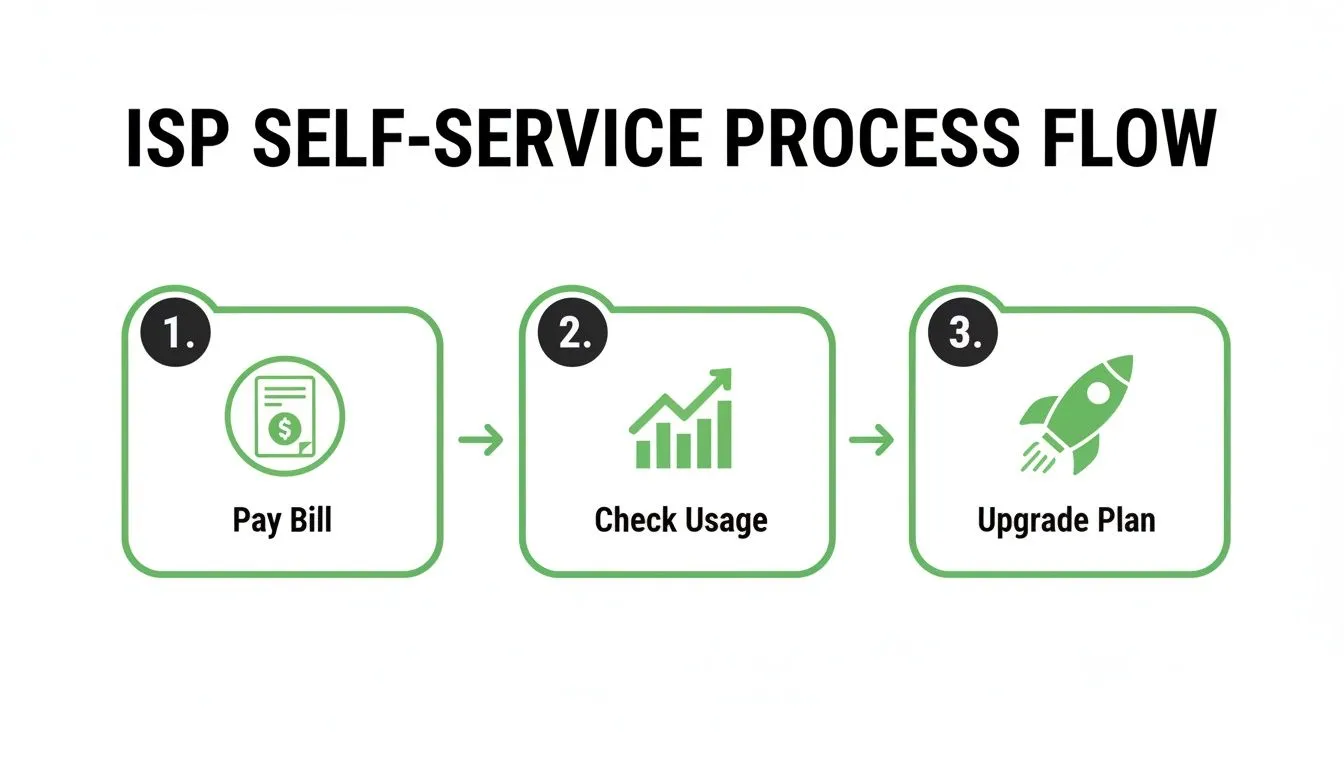
When customers can handle these key tasks, paying bills, checking usage, and upgrading their plan, it frees up your team and makes for happier clients.
Finally, don't overlook the implementation process. Moving away from spreadsheets might seem like a huge task, but a provider that supports you makes all the difference. The team at centipidbilling.com, for example, gives you free technical help to walk you through the setup, making sure the switch is as smooth as possible. Your goal is to find a tool that not only automates your work but truly enables your business to grow.
Frequently Asked Questions
Switching to a proper ISP billing system is a big step, especially if you're currently juggling spreadsheets and manual follow-ups. It’s natural to have questions. Here are some of the most common ones we hear from fellow Ugandan ISPs, with straightforward answers to help you see the path forward.
Can I Use Centipid If My ISP Is Very Small?
Yes, absolutely. The system found at centipidbilling.com was built specifically to grow with you. It doesn’t matter if you have 50 customers or 5,000; the system is priced to be affordable right from the start, so you don't need a huge budget to get going.
Think of it this way: putting a solid system in place when you're small is like building a strong foundation for a house. It prevents the chaos that comes with rapid growth and ensures your operations are smooth from day one, freeing you up to focus on winning more customers.
How Hard Is It to Switch from Spreadsheets to an Automated System?
It’s much more straightforward than most people think. You won’t be left on your own to figure things out. The team at centipidbilling.com guides you through the entire process.
They provide free technical support to help with the essential steps, including:
- Getting your customer data out of your existing spreadsheets.
- Importing all that information cleanly into the platform.
- Connecting the system to your MikroTik router and setting up your payment gateways.
The 14-day free trial is the perfect way to see this in action. You can test the migration process with your own data and get a real feel for how it works with your operations, all without any risk or commitment. You can learn more about the support they offer at centipidbilling.com.
Does the System Support Both Hotspot Vouchers and Monthly Subscriptions?
Yes, it handles both business models perfectly from one single dashboard. This kind of flexibility is essential for the Ugandan market, where many ISPs serve a mix of different customers.
You can easily run a public Wi-Fi hotspot selling timed or data-capped vouchers while also managing your residential clients on recurring monthly PPPoE subscriptions. As you can see in the Centipid documentation, it allows you to create, manage, and track all your different service plans in one central place.
What Happens If a Customer’s Mobile Money Payment Fails?
The system is built to handle the realities of everyday transactions. If a mobile money payment fails, for any reason, like insufficient funds or a network timeout, the invoice simply remains marked as "unpaid". No money is lost, and your records stay accurate.
The customer isn’t left wondering what happened. They can simply log into their self-service portal and try the payment again whenever they're ready. Meanwhile, the automated reminders you’ve set up will continue to gently nudge them, ensuring the invoice gets paid without you having to chase it down manually.
This automated process means you don't lose track of payments and your service disconnections for non-payment remain accurate, all without any extra work from your team.
Ready to stop revenue leaks and automate your operations? Centipid Technologies Ltd. provides the tools to help you grow. Start your 14-day free trial and see the difference for yourself at https://centipidbilling.com.