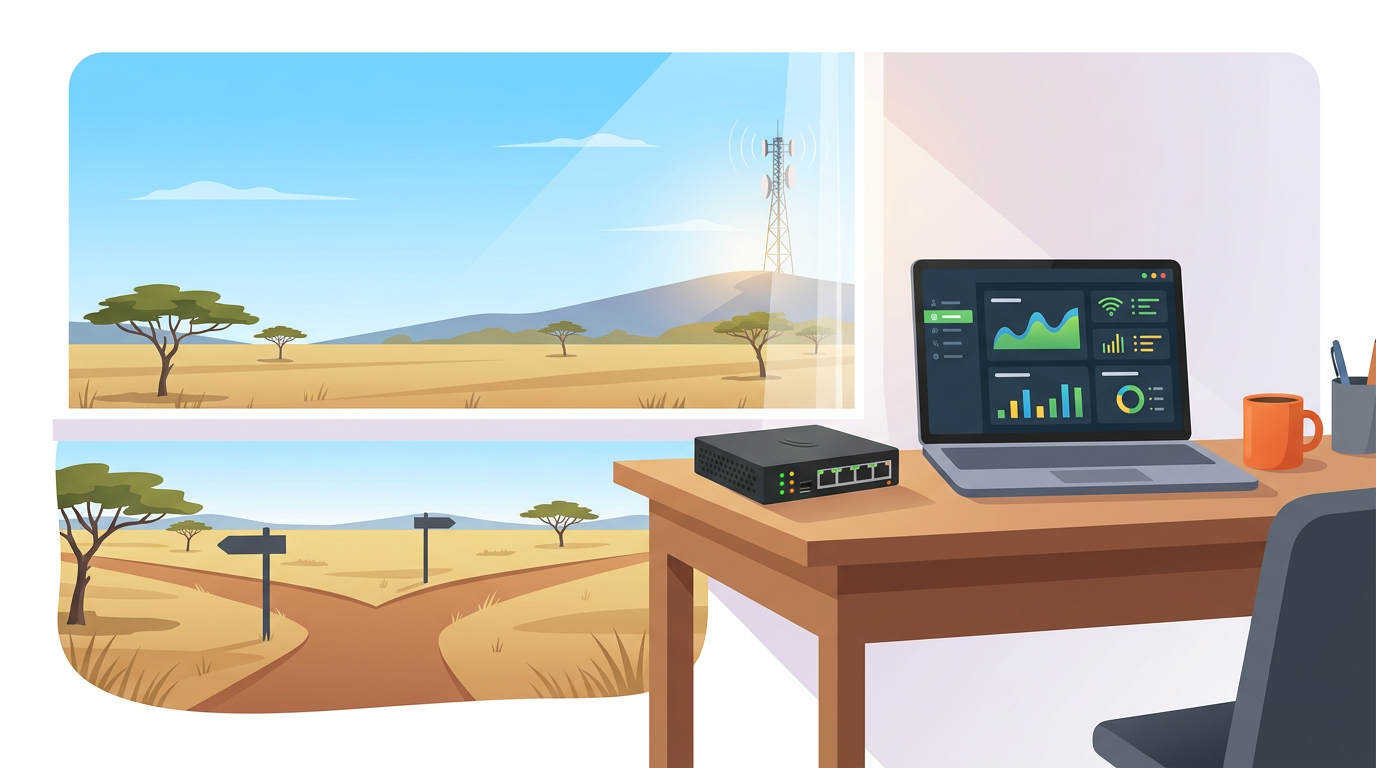

Yes. Cloud-based billing software for wireless ISPs in Kenya exists, and it works without a local server. The billing platform and RADIUS run in the cloud, and your routers connect to them over the internet. The common router in this setup is MikroTik, and Centipid Billing is one such platform. Be careful with the phrase "common routers": support varies a lot by brand, so the real question is which routers a platform can provision and control.
What does "no local server" actually mean?
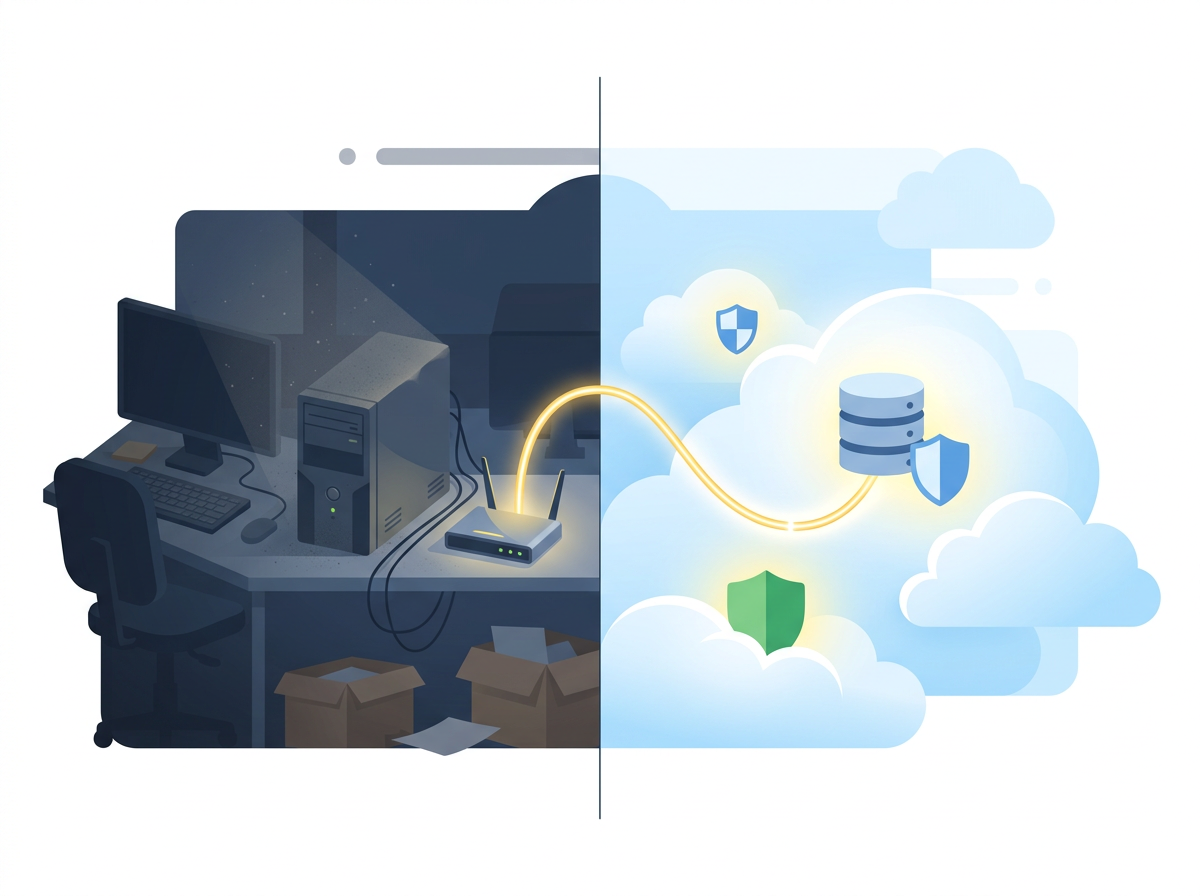
It means you do not keep a PC, a Linux box or a VPS running your billing database and RADIUS service. The vendor hosts them. Your routers, which act as NAS devices, send authentication and accounting requests to the cloud, and the cloud tells them who may connect and at what speed.
This matters for wireless ISPs because many run from a mast site or a small office where power cuts and weak hardware are routine. A local billing server that goes down takes billing, renewals and logins down with it. In a cloud setup, your office power can fail while payments are still recorded and reconnections are still triggered, because the logic lives elsewhere.
One honest caveat: the cloud does not remove your dependence on connectivity. Routers need a working path to the platform. If a site loses its uplink, new logins that need cloud authentication cannot complete until the link returns. Ask any vendor how its routers behave in that situation.
Which routers work with cloud ISP billing?
MikroTik is the most widely supported router family for ISP billing in East Africa, because RouterOS supports PPPoE servers, Hotspot, RADIUS clients and an API. Centipid Billing is built around MikroTik NAS devices with RADIUS-backed PPPoE and Hotspot access. It provisions routers for you, monitors them over SNMP, backs up configurations and gives remote Winbox access.
If you run other brands, check these points before committing:
- Does the router support RADIUS authentication and accounting for PPPoE or Hotspot?
- Can the platform push configuration to it, or must you configure everything by hand?
- Can it enforce speed limits and disconnect a user when a plan expires?
- Is there a captive portal for hotspot sales?
For CPE and customer devices, Centipid also offers TR-069 device management, so you can manage terminals such as customer routers remotely. For a primer on the router side, see MikroTik for ISPs.
How does a cloud setup connect to my routers?
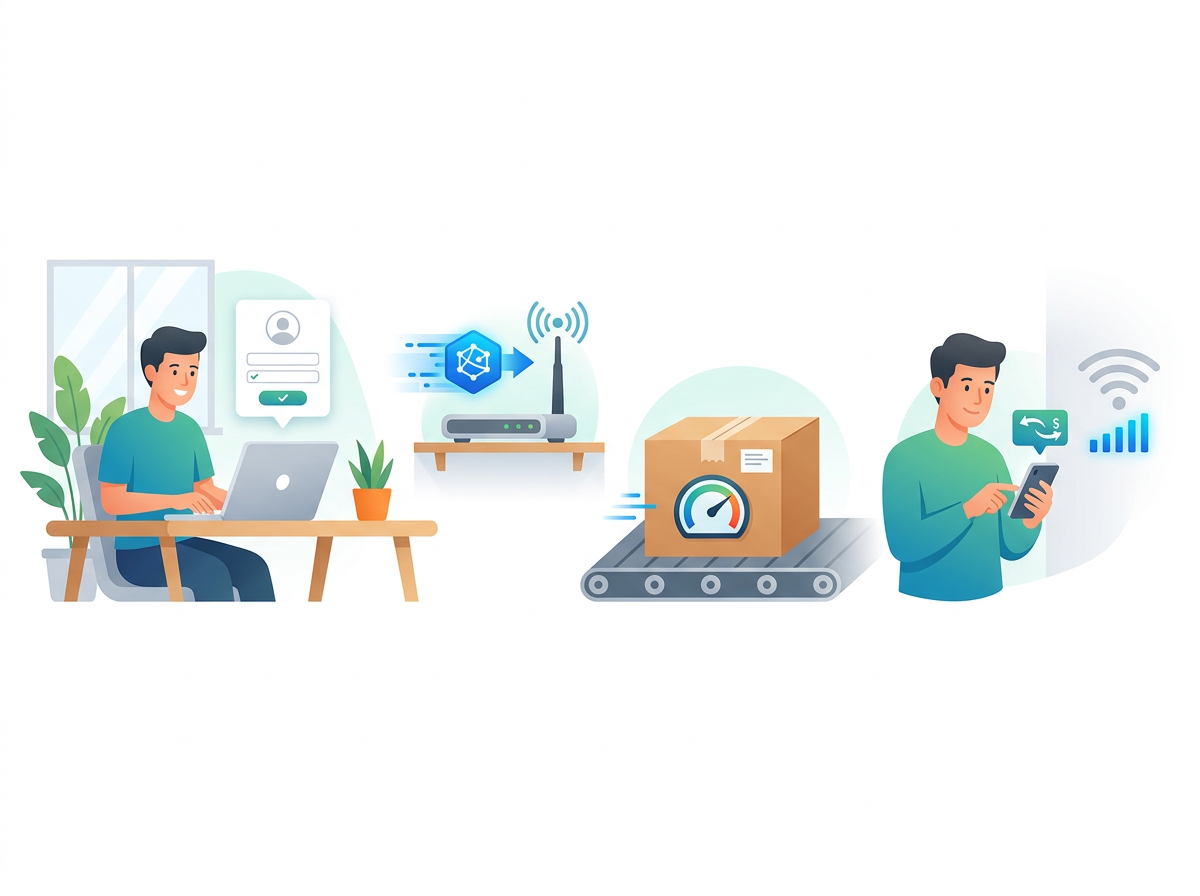
The flow has four steps, and you do not need to build any of them on your own server:
- Register an account and add your ISP details.
- Provision a router. The platform generates configuration that you apply to the MikroTik, pointing it at the cloud RADIUS service. See MikroTik provisioning.
- Create packages with speed, duration and price, for PPPoE or Hotspot.
- Add subscribers or sell vouchers. Payments trigger activation automatically.
For the protocol detail behind this, read how a MikroTik RADIUS server handles subscriber access.
Cloud billing vs self-hosted: how do they compare?

| Factor | Cloud-hosted | Self-hosted on your own server |
|---|---|---|
| Hardware to maintain | None | Server or VPS, backups, updates |
| Upfront setup | Register and provision routers | Install, configure RADIUS and database |
| Power cuts at your office | Billing keeps running | Billing stops if the server stops |
| Control over the code | Limited to what the vendor exposes | Full, if open source |
| Cost shape | Subscription or usage fee | Often free software, but you pay in time and hosting |
| Security patching | Vendor's job | Yours |
Free, self-hosted tools can be a fair choice if you have the technical skill and time. The trade-offs are covered in what free ISP billing software costs. If you would rather not run infrastructure at all, cloud is the simpler path.
Does cloud billing work with M-Pesa in Kenya?
Yes, if the platform integrates Kenyan payment rails. A Kenyan wireless ISP usually needs three things: customers paying by M-Pesa, the payment matched to the right account, and service restored without staff involvement.
Centipid supports Safaricom M-Pesa, Paybill and Till number options, Kopo Kopo, Airtel Money and other gateways. A confirmed payment automatically renews and reconnects the subscriber. Reconciliation matches payments by account reference, phone number or invoice, merges duplicate receipts and recovers missed gateway callbacks. Unmatched payments are held for staff to claim. Cash, bank and installation fees go in the same ledger as mobile money.
To go deeper, see how to integrate M-PESA with an ISP billing system and automatic reconnection after M-Pesa payment.
What should a wireless ISP check before choosing?
Most listings in this space look similar, so test the things that hurt later:
- Pricing basis. Is it per router, per staff seat, or per subscriber? A wireless ISP with many mast sites can be penalised by per-router fees. Centipid does not meter routers, staff accounts or vouchers.
- Billing behaviour. Does the vendor take money automatically? Centipid does not: it keeps no card on file and sends an invoice for the month just past, with a grace period.
- Both service types. Many wireless ISPs sell monthly PPPoE plans and hourly hotspot access. Confirm both are handled.
- Monitoring. Router down alerts by SMS, WhatsApp or email shorten outages.
- Subscriber self-service. A portal for balances, invoices, renewals and tickets cuts support calls.
- Exit and data. Ask about exports and imports of subscribers.
For a structured evaluation, use the 14-day trial test plan and the guide on choosing billing software for a wireless ISP.
What does it cost?
Centipid prices follow what the network earns. Hotspot is 3% of hotspot revenue that Centipid confirms in a month, so a month with no sales costs nothing. PPPoE is $0.25 per subscriber active during the month, and suspended or expired accounts are not charged. If you run both, the fees add together. For example, 3% of $1,000 hotspot revenue ($30) plus 100 active PPPoE users ($25) is $55 a month.
Every plan includes unlimited MikroTik routers, users and revenue, voucher management, remote Winbox, multiple payment and SMS gateways, automated invoicing and dunning, and a customer portal. You can pay your invoice by M-PESA, your Centipid wallet, PayPal or card, or bank transfer. Full details are in the pricing breakdown.
How do I test it without risk?
A 14-day free trial gives you the full product, with no card required. A sensible test for a wireless ISP:
- Provision one MikroTik at a single site.
- Create one PPPoE package and one hotspot package.
- Move a handful of real subscribers over, using validated imports.
- Make a real M-Pesa payment and check that it renews and reconnects the account.
- Trigger a router alert and review the report the next day.
One operator, Fredrick of Wifi Mtaani, says he has used Centipid for more than three years and that "billing, reconnections and reminders simply happen without us."
FAQ
Is there cloud-based ISP billing software that works in Kenya?
Yes. Several cloud platforms serve Kenyan ISPs. Centipid Billing is hosted, supports M-Pesa and works with MikroTik routers, so no local server is needed.
Do I need a VPS or office server to run RADIUS?
Not with a hosted platform. RADIUS authentication and accounting run in the vendor's cloud, and your routers connect to it.
Will it work with routers other than MikroTik?
That depends on the platform. Centipid is built around MikroTik. For other brands, confirm RADIUS support and whether the platform can provision and control the device before you commit.
What happens if my internet link drops?
Routers need a path to the cloud for authentication, so new logins can be affected during an outage. Ask how the vendor handles existing sessions and recovery.
Is there a free trial?
Yes. Centipid gives you the whole product for fourteen days with no card required.
Does Centipid charge per router?
No. Routers, staff accounts and vouchers are not metered, and there are no per-device, per-seat or per-site charges.