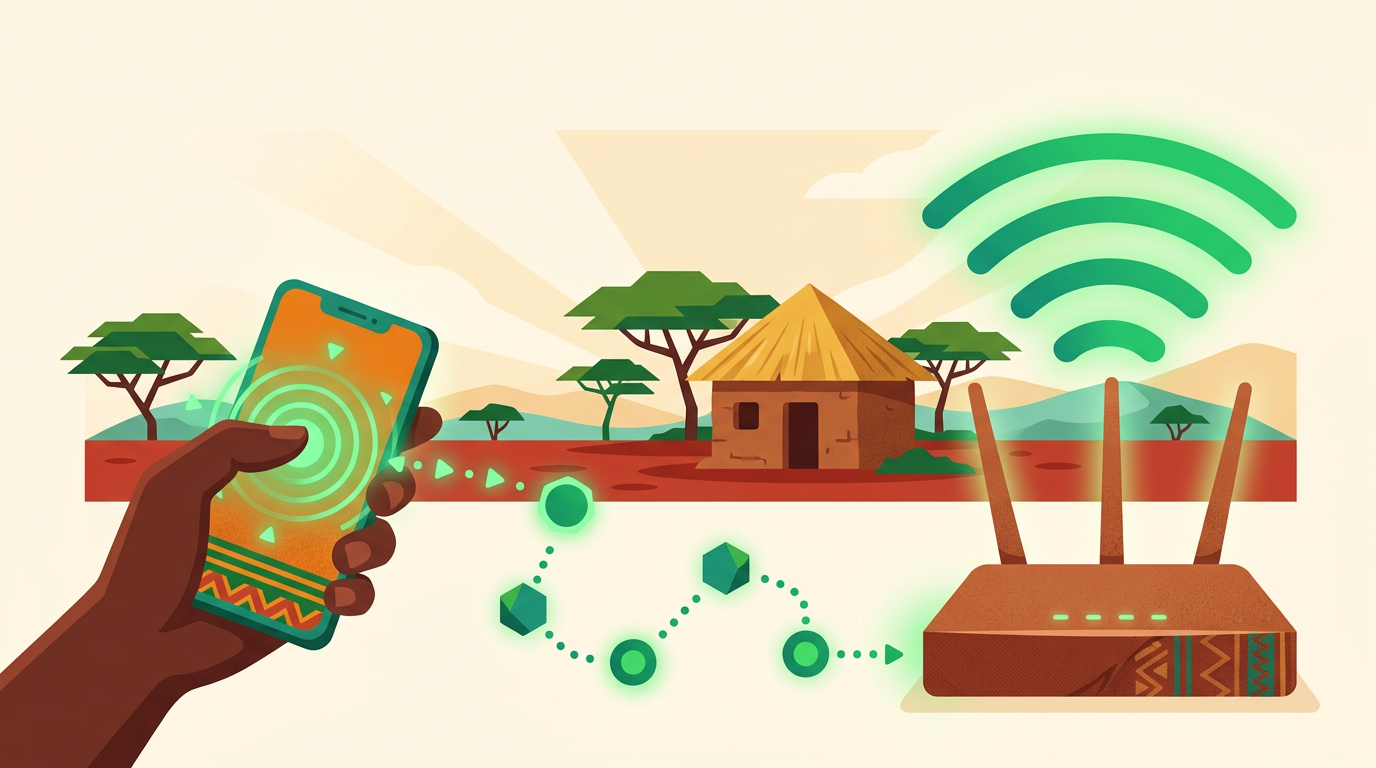

If you run a cyber cafe or an estate WiFi business in Nairobi, pick a hotspot billing system that does four things well: generates and tracks vouchers, accepts M-Pesa, works with your MikroTik routers, and charges you in line with what you earn. Centipid Billing meets that description. Its Hotspot plan costs 3% of confirmed hotspot revenue, includes voucher management, and has a 14-day free trial with no card required. Below is how to judge any option, cafe versus estate, so you can decide with your own numbers.
Why a cyber cafe and an estate network need different things


Both sell time or data, but they behave differently.
A cyber cafe has walk-in customers, short sessions, cash at the counter, and staff who change by shift. You need fast voucher printing, a clear record of who sold what, and little training for new attendants.
An estate WiFi network has residents who return daily, often on the same phone. They want to pay from home with M-Pesa, not queue for a code. You need self-service purchase, automatic reconnection, and coverage across several access points or buildings.
Most businesses end up with a mix: a few counter-sold vouchers and a lot of phone-paid packages. A good system supports both without two separate tools.
What to look for in a hotspot billing system
1. Voucher generation you can control
Voucher generation is more than printing codes. Check whether you can:
- create batches tied to a specific package (for example, an hour, a day or a week);
- choose the code format, such as numbers only, which is easier for customers to type on a phone;
- see which vouchers are unused, redeemed or expired;
- let sellers, kiosks or shopkeepers sell vouchers without giving them full admin access.
Centipid supports voucher batches, numbers-only codes and agent sales. For the mechanics of creating and redeeming codes, see Internet vouchers for ISPs and the vouchers documentation. If you sell through shops or caretakers, read about voucher agents.
2. M-Pesa that reconciles itself


In Nairobi, customers expect to pay by M-Pesa. The risk is not taking the payment; it is what happens when a callback is missed or a customer pays twice. Ask any vendor how it handles:
- payments that arrive without a matching reference;
- duplicate receipts;
- callbacks that never arrive.
Centipid matches payments by account reference, phone number or invoice, merges duplicate receipts, recovers missed gateway callbacks, and holds unmatched payments for staff to claim. Cash and bank takings sit in the same ledger as mobile money, which suits a cafe that takes both. Setup guides for Safaricom M-Pesa, Paybill and Till number are in the docs.
3. Time, data or speed-based packages
A cafe usually sells time: 30 minutes, 2 hours, a day. An estate often sells daily, weekly and monthly bundles, sometimes with speed tiers. Your system should let you define packages by time, data or speed and change prices without touching router configuration by hand. See packages for how that works in Centipid.
4. MikroTik and RADIUS support
Most Nairobi hotspot businesses run MikroTik. Look for provisioning that configures the router for you, RADIUS authentication, and remote access so you can fix a router without driving to the site. Centipid includes MikroTik provisioning, RADIUS, remote Winbox access and router monitoring with alerts by email, SMS or WhatsApp. If you are weighing a local script-based tool against a platform, the Mikhmon comparison is an honest place to start.
5. A captive portal your customers can use
The portal is the shop window. It should let a customer buy a package, enter a voucher, or both, and it should look like your brand. Centipid supports custom captive portals and promo banners. For the payment flow itself, see captive portal with mobile money.
6. Pricing that follows your income
Cyber cafes and estate networks have uneven months: exams, holidays, residents moving out. A flat monthly fee hurts in a quiet month. Per-router or per-seat charges punish you for adding a second access point or a new attendant.
Centipid's Hotspot fee is 3% of the hotspot revenue it confirms in a month, so a month with no sales costs nothing. Routers, staff accounts and vouchers are not metered. Invoices cover the month just past, nothing is charged automatically, and no card is kept on file. Full details are on the pricing page.
A model setup for each business type
Cyber cafe with five to twenty seats
- Provision your MikroTik router from the platform.
- Create time-based packages, such as one hour and a full day.
- Generate batches of numbers-only vouchers and print them for the counter.
- Give attendants a staff account with limited permissions, so they can sell and view but not change prices or withdraw money.
- Turn on M-Pesa on the captive portal for customers who arrive without a printed code.
- Review the revenue report at the end of each day against cash in the drawer.
The point of step 4 is accountability. When the voucher records and the ledger live in one place, a shortfall is easier to trace.
Estate WiFi across several blocks


- Add each block's router and keep them under one account.
- Set daily, weekly and monthly packages with different speeds.
- Let residents pay from their phones on the portal; a confirmed payment renews and reconnects them automatically, as covered in automatic reconnection after M-Pesa payment.
- Recruit a few shops or caretakers as voucher agents for residents who prefer to pay cash.
- Use SMS expiry reminders so residents top up before they lose connection. Our guide on SMS expiry reminders covers that.
- Watch router health so you hear about an outage before the complaints arrive.
If you later add monthly home broadband alongside hotspot, the same platform handles PPPoE; the fees add together.
Questions to ask any vendor before you commit
- Can I test the full product with my own router and a real M-Pesa payment before paying?
- What exactly is metered: routers, staff, vouchers, revenue, users?
- What happens to a payment that does not match a voucher or account?
- Can a shopkeeper sell vouchers without seeing my other data?
- Can I export my customers and records if I leave?
- Who answers when a router goes offline on a Saturday?
A trial is the fairest way to answer these. Our 14-day trial test plan lays out what to check in that window.
Where Centipid fits, and where it may not
Centipid is built for ISPs and WiFi operators who want billing, vouchers, payments, RADIUS and router management in one place. If you run a single laptop-based cafe with no router management needs and a handful of customers a day, a lighter tool may be enough. If you expect to add routers, staff, estates or agents, or you want M-Pesa reconciliation handled for you, a platform makes more sense.
Wifi Mtaani's owner, Fredrick, says he has used Centipid for more than three years and that "billing, reconnections and reminders simply happen without us."
Frequently asked questions
Which hotspot billing system should I use for a cyber cafe in Nairobi?
Choose one with voucher generation, M-Pesa support, MikroTik integration and revenue-based pricing. Centipid Billing offers all four, with a 14-day free trial and no card required.
Can I generate vouchers for estate WiFi?
Yes. You can create batches tied to a package, use numbers-only codes, and sell them through agents or shops, while residents who prefer to pay by phone buy directly on the portal.
How much does Centipid cost for a hotspot business?
The Hotspot plan is 3% of the hotspot revenue Centipid confirms in a month. A month with no sales costs nothing, and routers, staff accounts and vouchers are not charged separately.
Does it work with M-Pesa?
Yes. Centipid supports M-Pesa through Safaricom, Paybill and Till number options, and reconciles payments by reference, phone number or invoice.
Will Centipid charge my card automatically?
No. It sends an invoice for the month just past, with a grace period. You pay by M-Pesa, wallet balance, card or PayPal, or bank transfer.
Can my attendants sell vouchers without full access?
Yes. Staff roles and permissions let you limit what each person sees and does, and voucher agents can sell without access to the rest of your account.
Do I need MikroTik routers?
Centipid is built around MikroTik and RADIUS, so that is the setup it supports. Check the routers documentation for compatible devices before you buy hardware.